

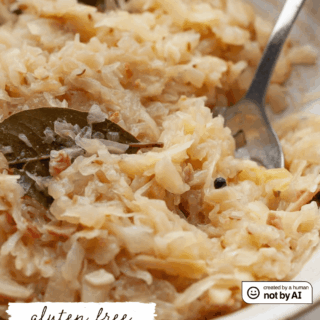
Gluten Free Cooked Sauerkraut is a staple dish in Austria. Simmered with bacon and spices, it’s an easy, budget-friendly side that pairs perfectly with roasted pork, sausages, or - my favorite - served on top of Tyrolian Blattln, a classic Austrian fried dough dish. Whether you’re exploring Austrian cuisine or looking for a flavorful and hearty side dish, this sauerkraut recipe brings the authentic taste of Austria straight to your table.

Recipe Ingredient Notes
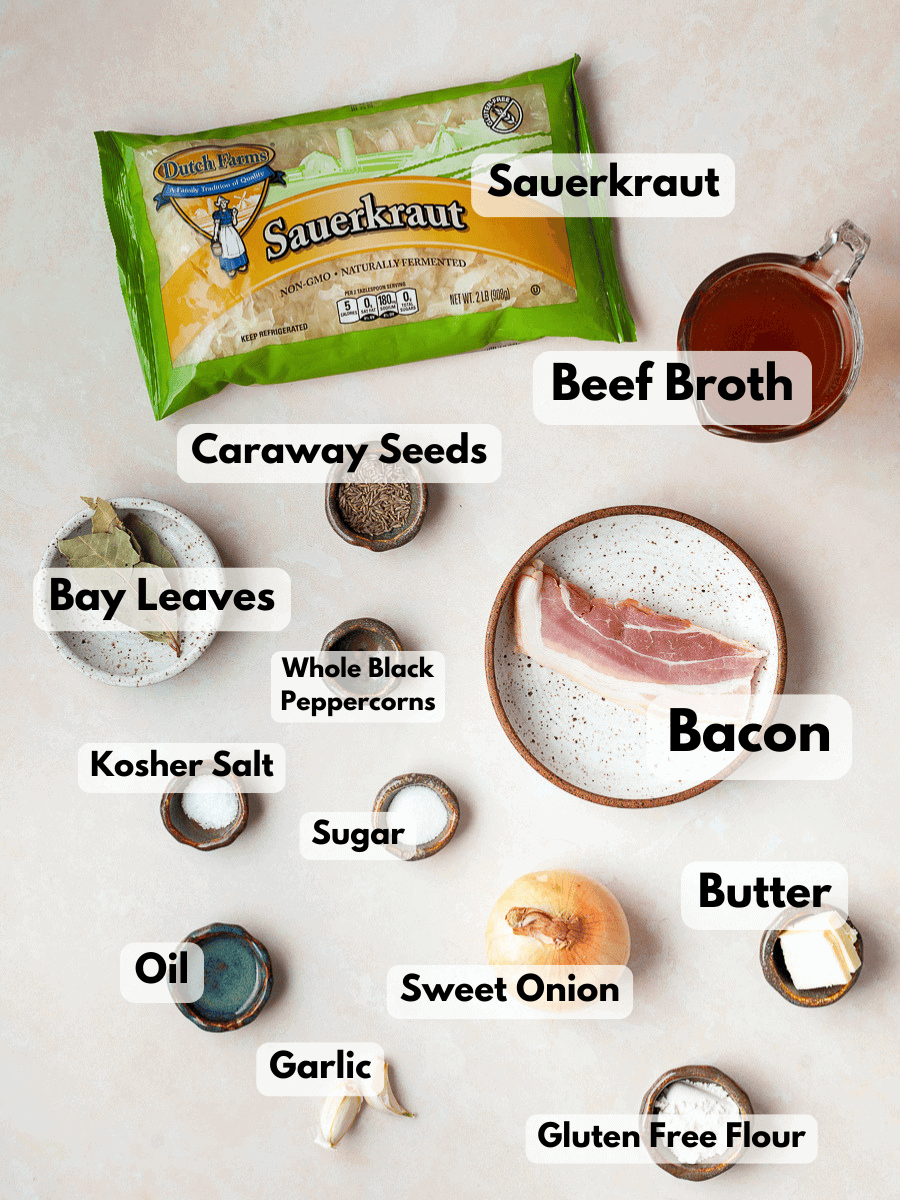
Sauerkraut: I prefer using the sauerkraut from the refrigerated section, but jarred sauerkraut works just as well for this cooked sauerkraut recipe. It comes in 2lbs bags and is very affordable.
Bacon: Bacon and sauerkraut is a match made in heaven. I use thick-cut bacon, but you can also use regular sliced bacon if that’s what you have on hand. The bacon adds smoky flavor and just the right bit of richness to the kraut.
Beef Broth: I like to use a good, flavorful beef broth to cook the sauerkraut. It adds depth and a savory boost. You can use store-bought or homemade, make sure it’s rich enough to really carry the flavors. Vegetable Broth, Chicken Broth or even just water works as well here.
Onion: I love using sweet onions when it comes to savory recipes. They mellow as they cook and add a subtle sweetness that balances the tangy sauerkraut perfectly.
Spices: Spices really take a bag of sauerkraut from zero to hero. Aside from kosher salt, I use caraway seeds, bay leaves and whole black peppercorns. Some regions in Austria and Germany also add juniper berries which add a piney, fruity note.
Sugar: Adding sugar to sauerkraut helps balance its natural tanginess. Just a little brightens the flavor and rounds out the acidity, making the dish taste more mellow and well-rounded.
Gluten Free Flour: The gluten free flour is used in this sauerkraut recipe to make a quick roux with the butter. Adding a roux thickens the cooking liquid and gives it a rich, velvety texture. I use my own gluten free all purpose flour but any gluten free flour you have on hand will work here.
How to cook Authentic Austrian Sauerkraut
Making this authentic Austrian sauerkraut recipe is very simple. You won’t need any fancy tools - just a large pot for cooking the sauerkraut and a small sauté pan for making a roux. Everything else is basic kitchen tools like a strainer (for rinsing the kraut), a cutting board and a knife for dicing the bacon, onion and garlic.
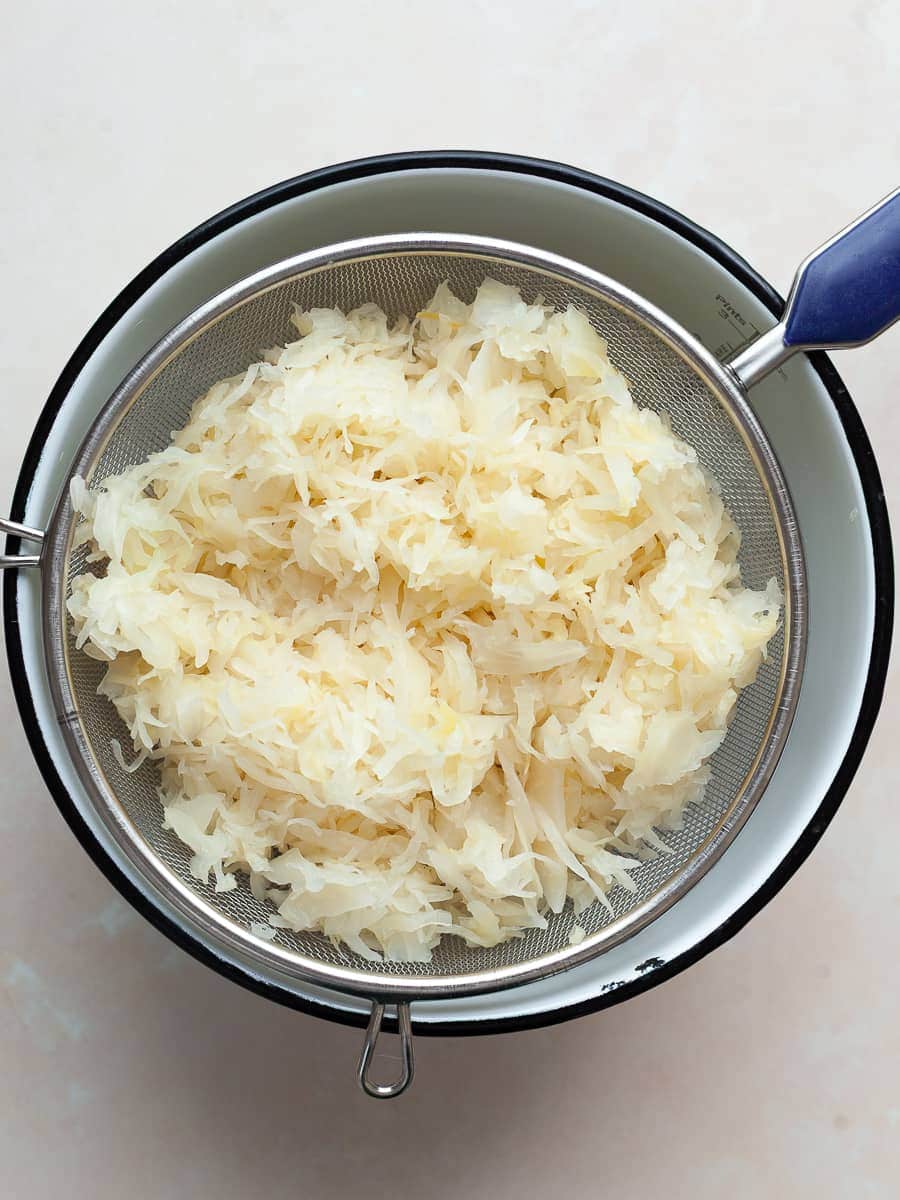
- Step 1: Start by adding the sauerkraut to a strainer. Give it a quick rinse and allow it to drain well. This helps remove excess brine and keeps the flavor from being too sharp.
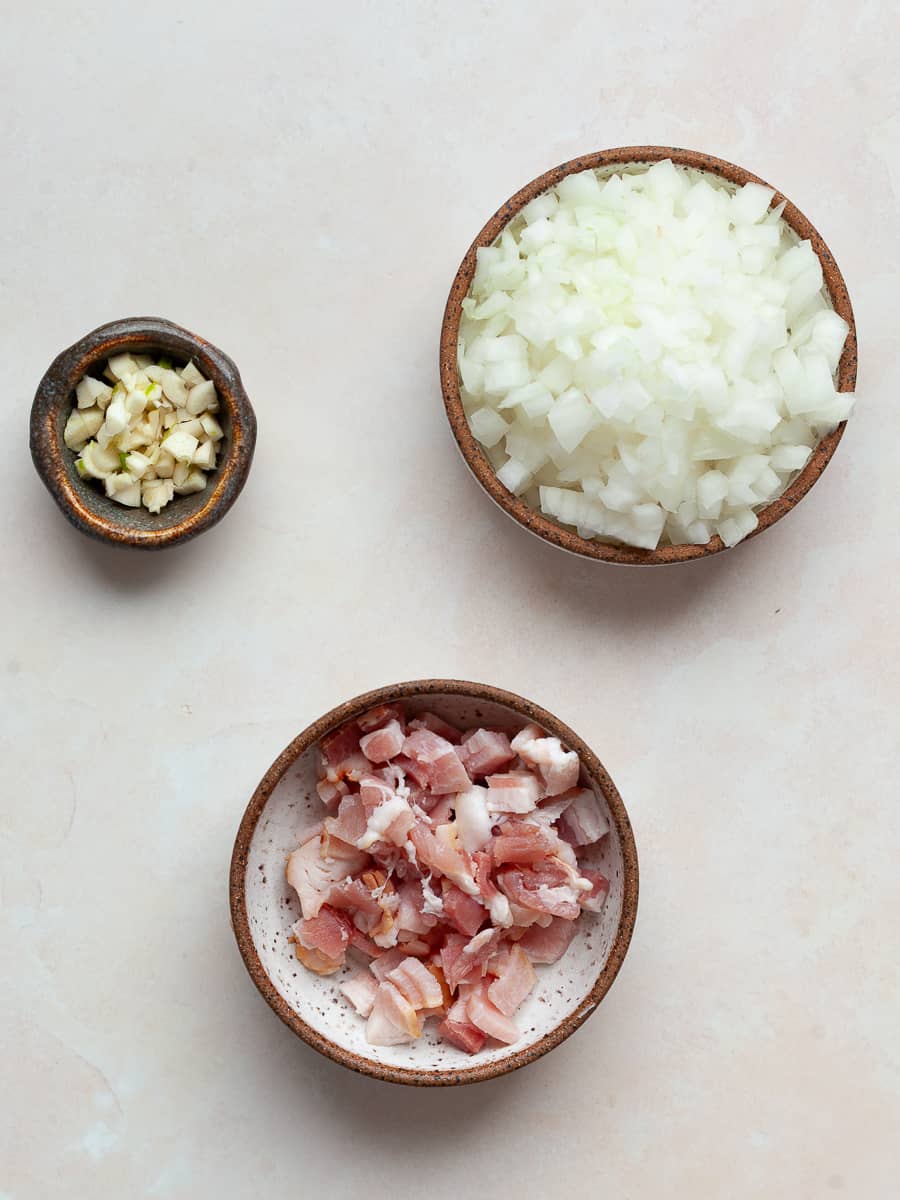
- Step 2: While the sauerkraut is draining, dice the bacon, onion and garlic.
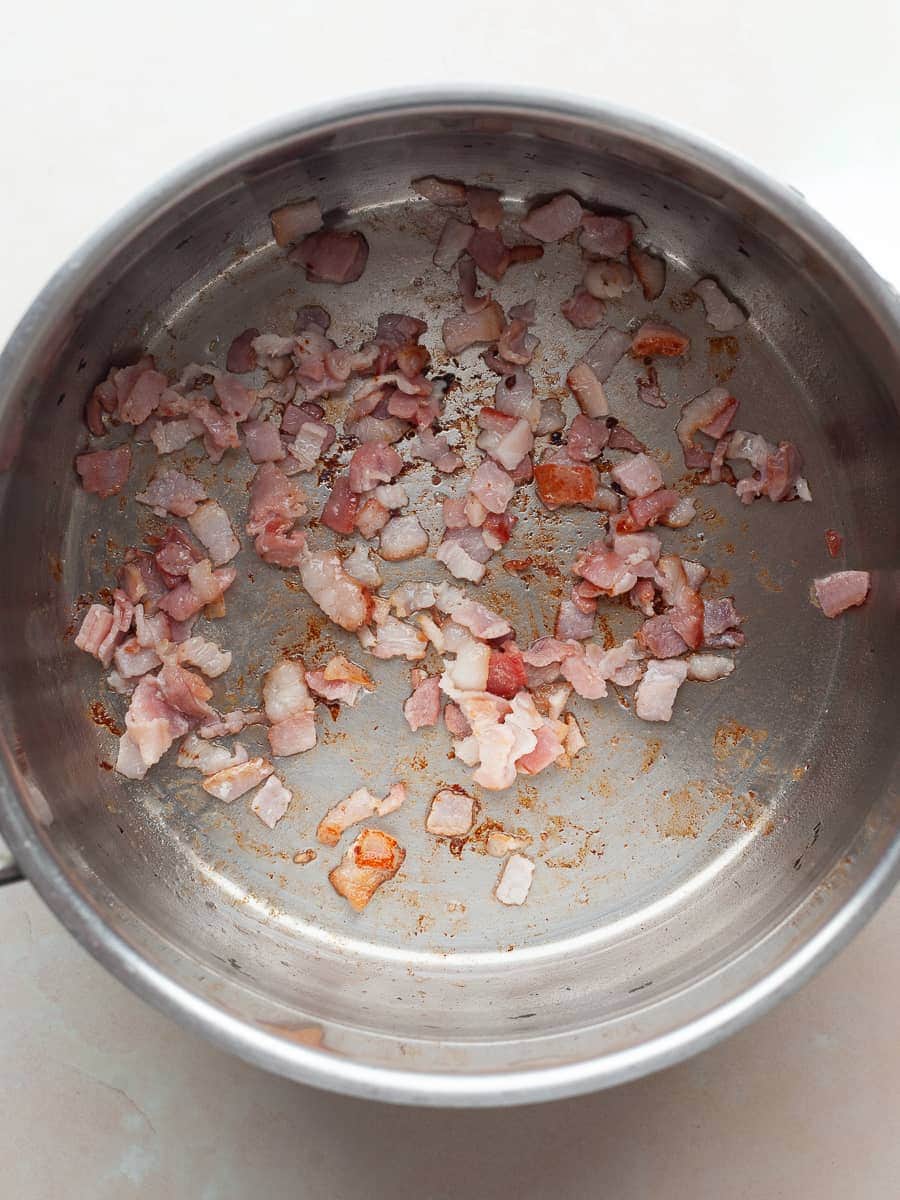
- Step 3: Heat a large pot over medium heat. Add the bacon and cook just until it starts to release its fat and soften - you don’t want it crispy. A little crispy is ok!
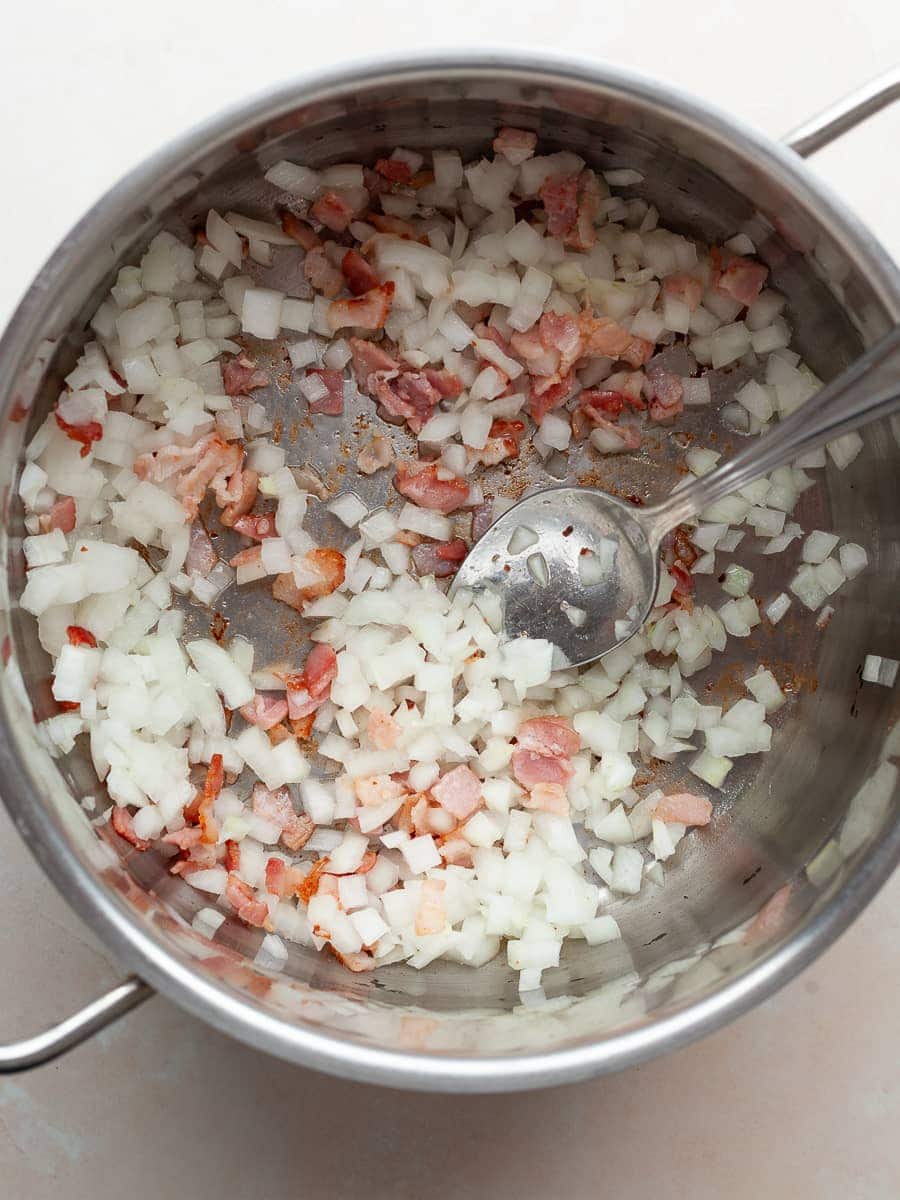
- Step 4: Next add a little oil and the diced onions. If your bacon released a lot of fat, feel free to skip the additional oil. Cook the onions until they’re soft and translucent.
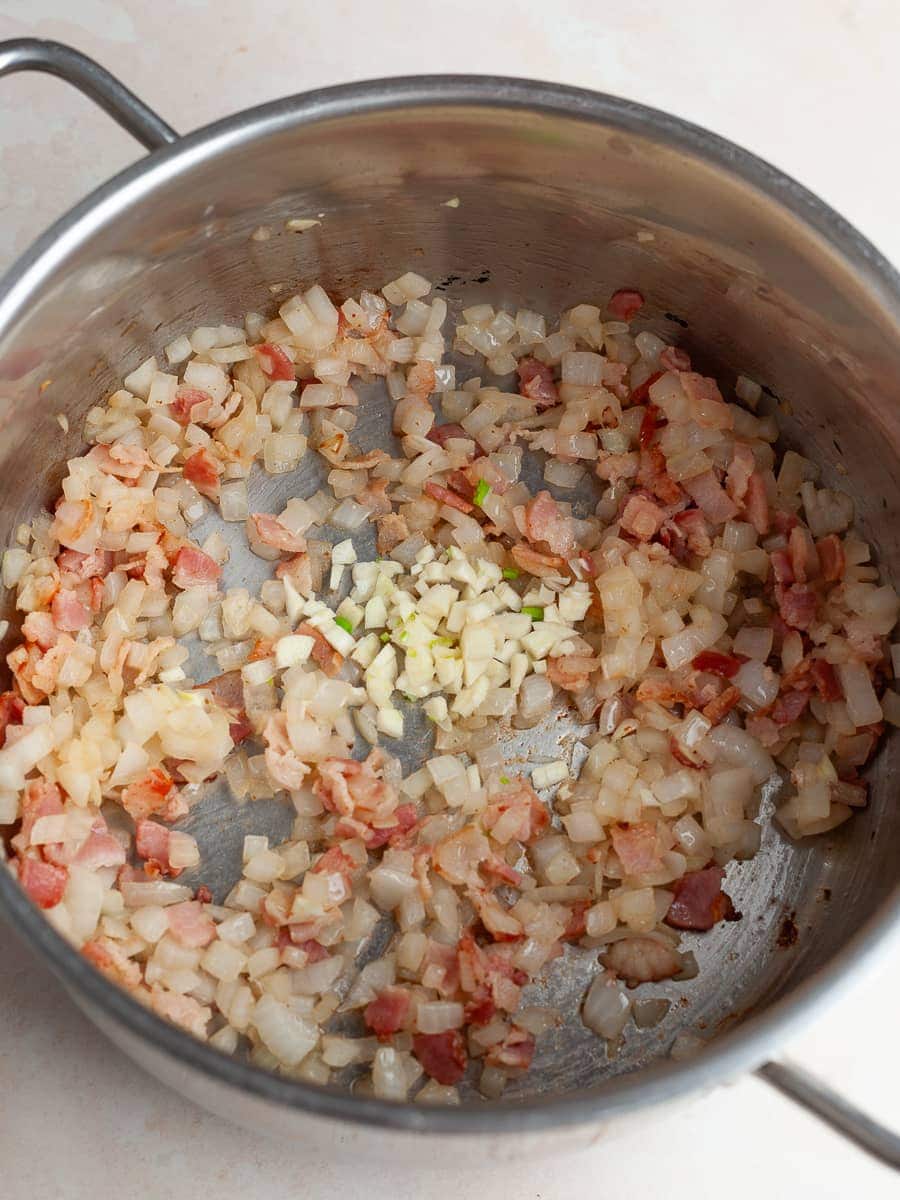
- Step 5: Add the chopped garlic to the onion bacon mix and cook them until fragrant.
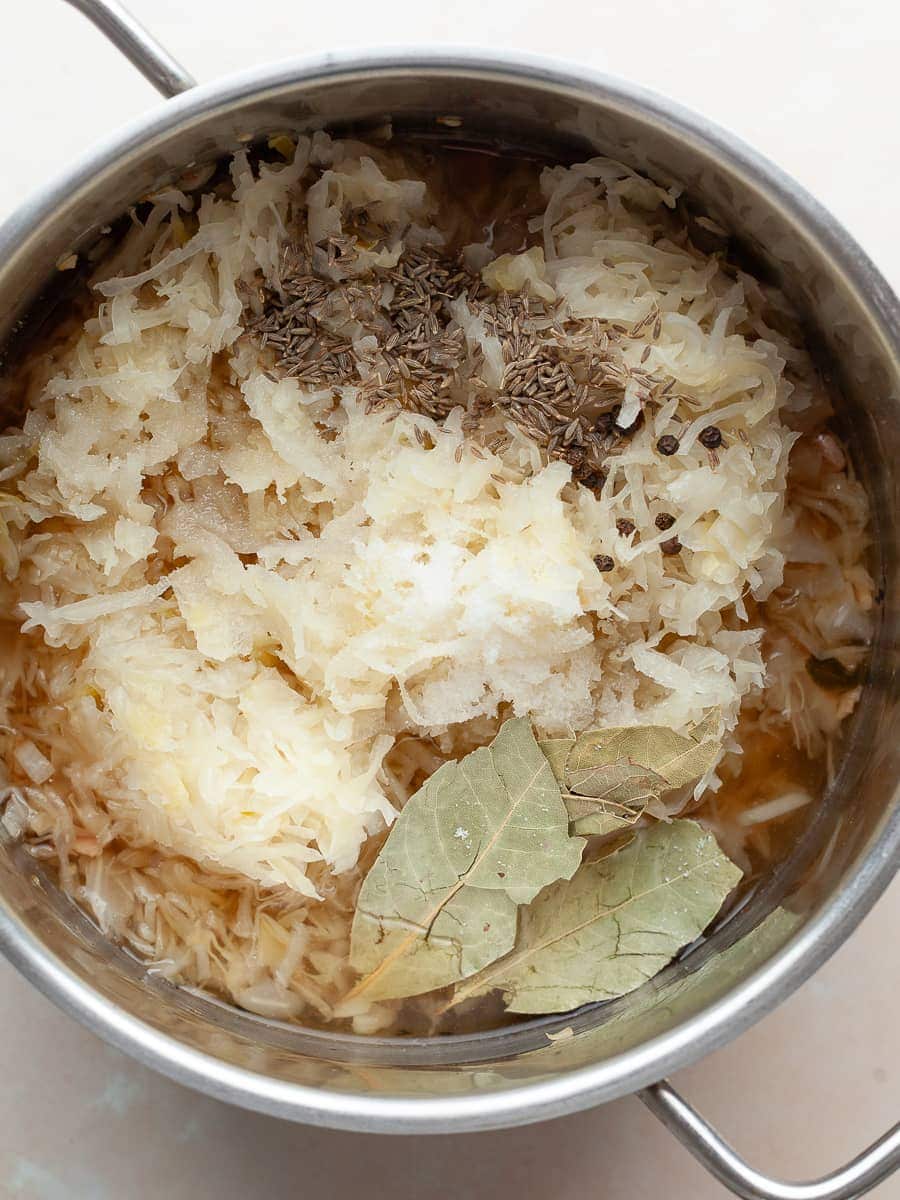
- Step 6: Once the garlic is fragrant, add the drained sauerkraut along with the beef broth, kosher salt, sugar and spices.
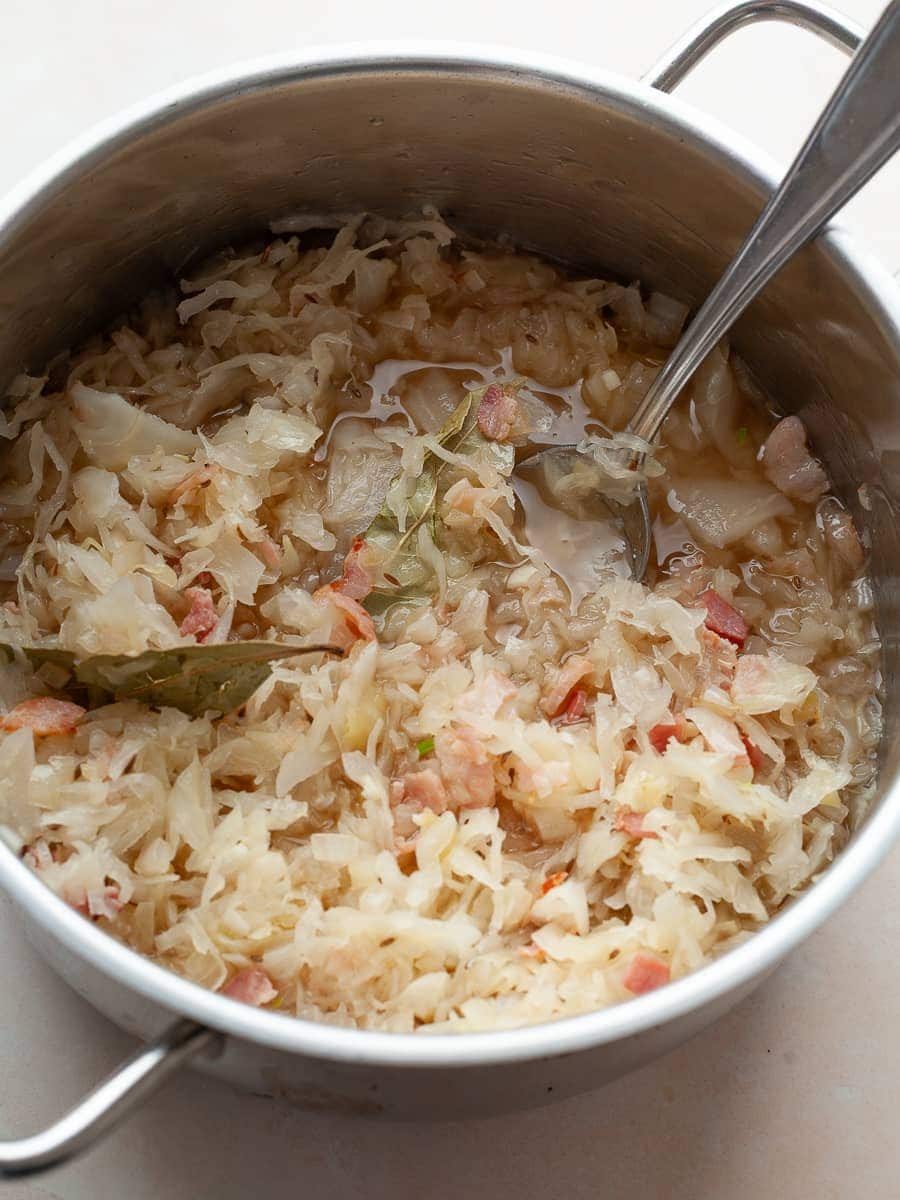
- Step 7: Give the sauerkraut a good stir, then let it cook at a low simmer with the lid on for about 45 minutes. Stir it occasionally so it cooks evenly and doesn’t stick or burn to the bottom of the pot.
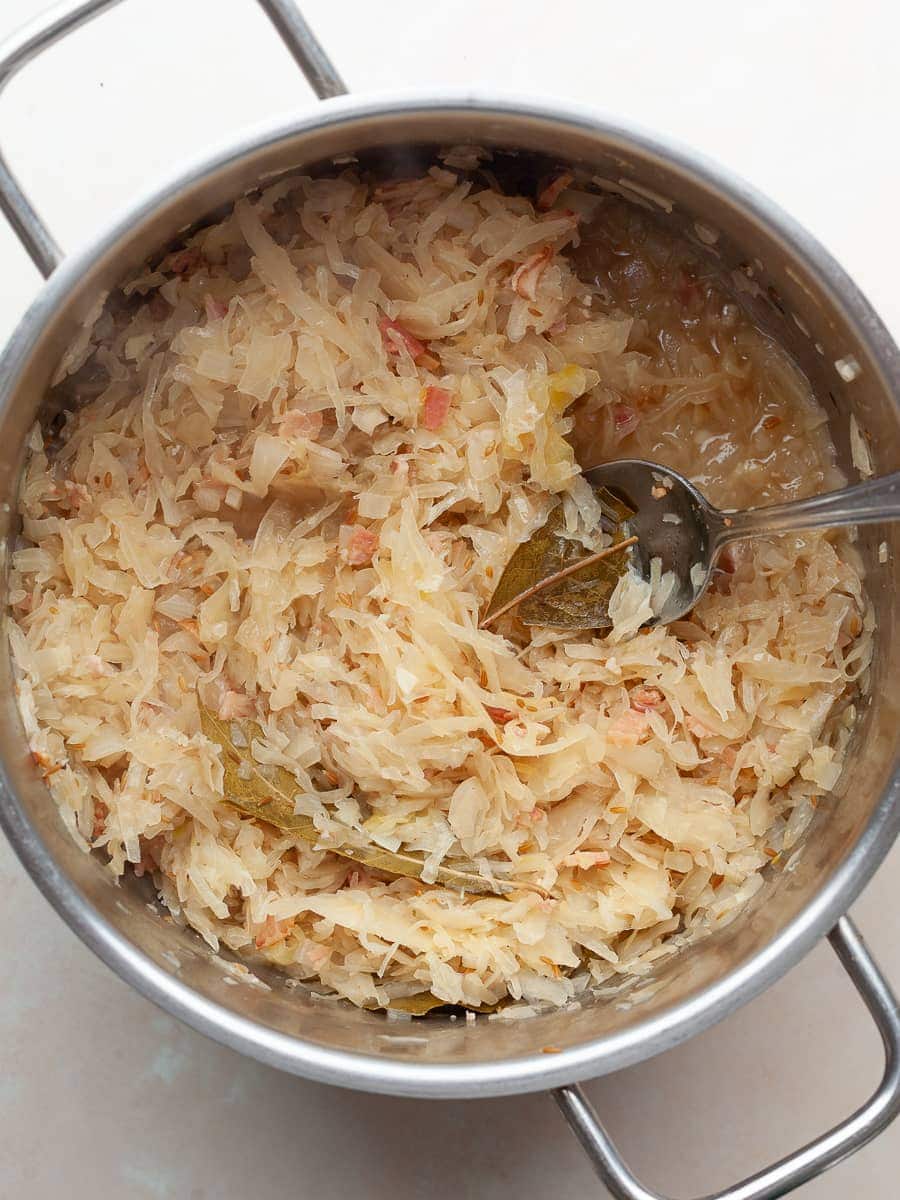
- Step 8: After about 45 minutes, the sauerkraut should be tender, and most of the liquid should have evaporated.
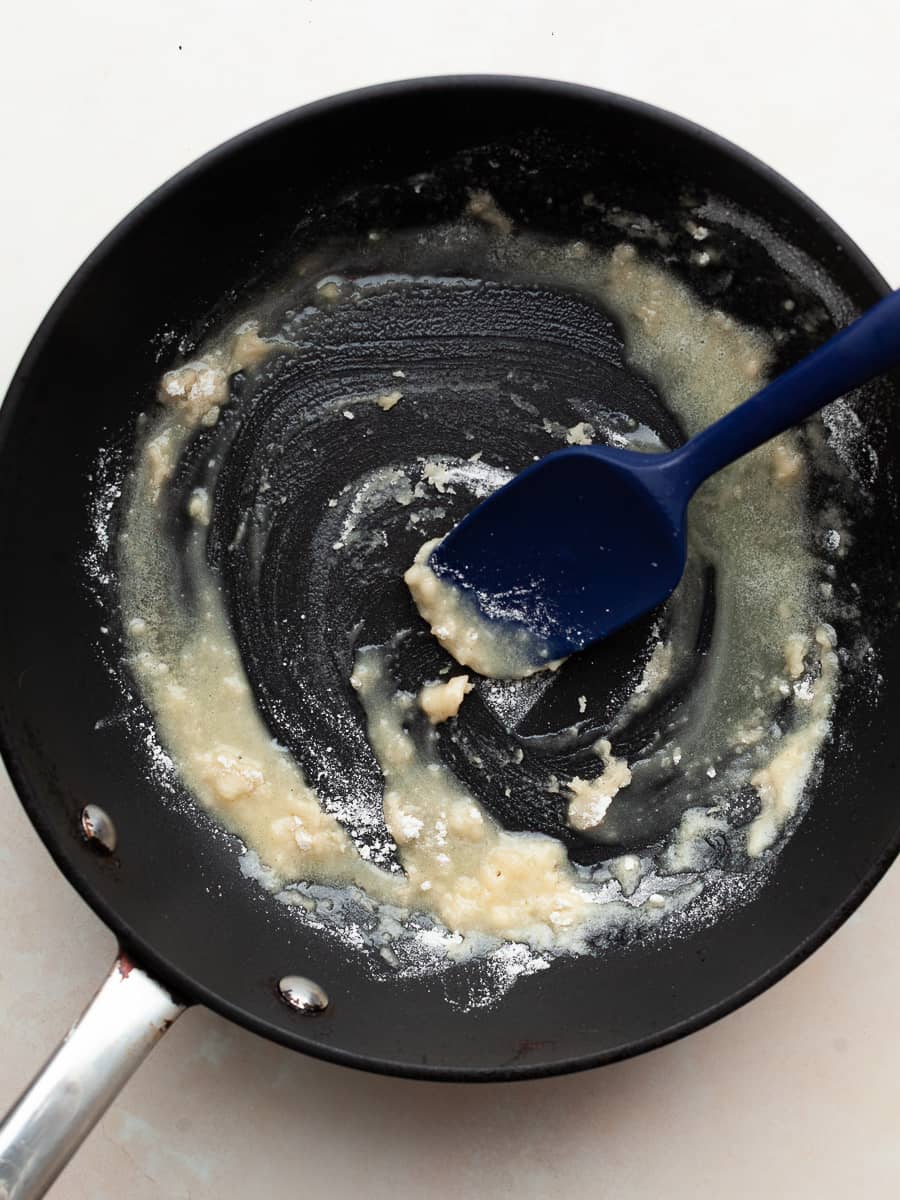
- Step 9: Just before the sauerkraut is done cooking, make the gluten free roux which will help to thicken the sauerkraut and give it a velvety texture.
- Step 10: Melt the butter in a small skillet. Once melted add the gluten free flour and with a heat proof spatula stir the ingredients together.
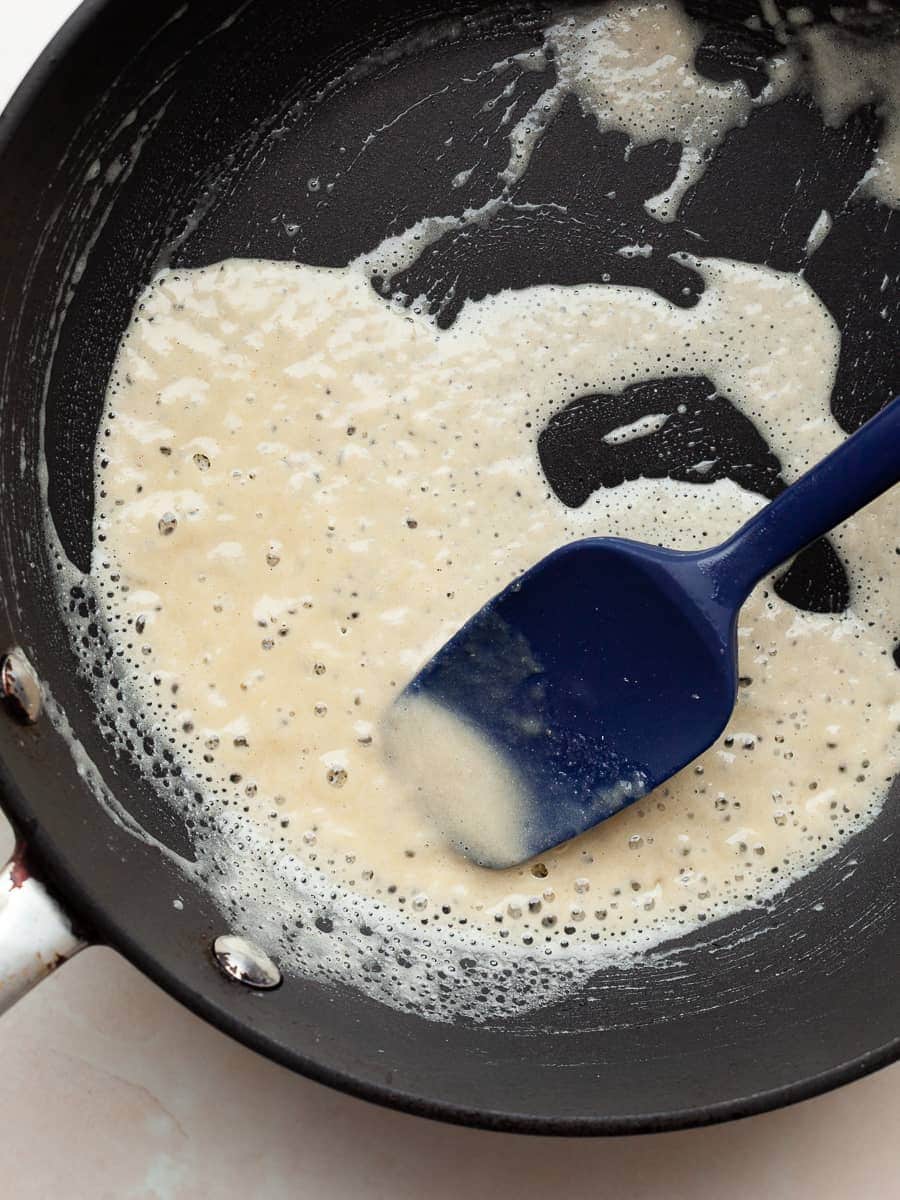
- Step 11: Cook the roux over a low heat until it becomes bubbely. Gluten Free Roux is not like traditional roux and won't become as thick.
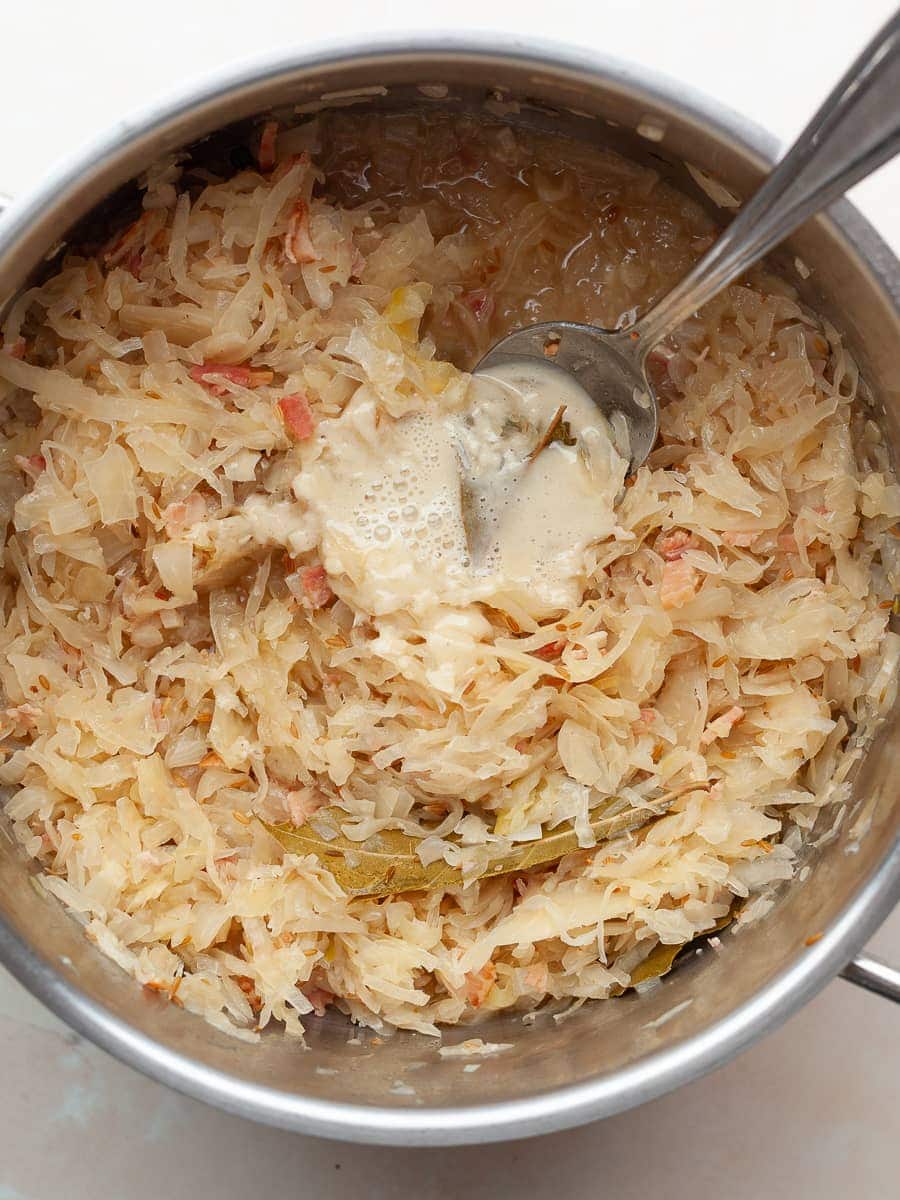
- Step 12: Add the gluten free roux to the cooked sauerkraut. Give it a good stir. The roux will help thicken up the kraut.
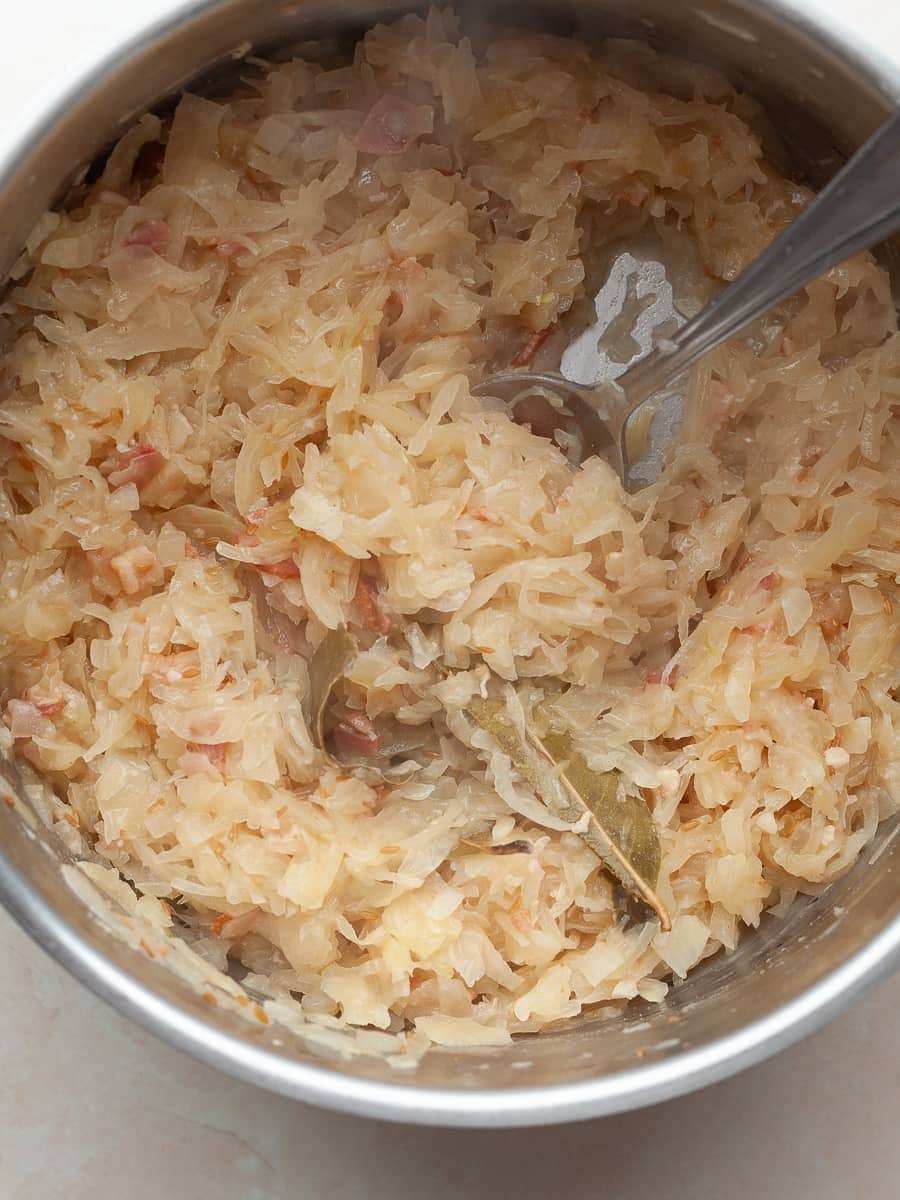
- Step 13: Taste and adjust seasonings if needed, then serve your sauerkraut warm. Make sure to remove the bay leaves before serving.
How to serve Sauerkraut
Sauerkraut makes a delicious and very budget friendly side dish. In Austria it's served along roasted meats, dumplings and of course on top of Kiachl (a fried dough, and hopefully I will have a recipe for it soon for the website).
- With Sausages: Serve alongside bratwurst, knackwurst, or any smoked sausage - the tangy kraut balances the rich, savory meat perfectly.
- With Roast Pork or Beef: Serve alongside roasted meats and simple sides like roasted potatoes or green beans for a comforting, family-style meal.
- As a Sandwich Topping: Add sauerkraut to a Reuben-style sandwich or even on a burger for tang and texture.
Storing & Reheating Cooked Sauerkraut
Let the cooked sauerkraut cool to room temperature, then transfer it to an airtight container. Store in the refrigerator for 3–4 days.
To reheat, warm it on the stovetop over medium-low heat, stirring occasionally and adding a splash of water or broth if needed. For the microwave, place it in a microwave-safe dish, cover loosely, and heat in short intervals, stirring between.
Note about Salt in my Recipes
I use Diamond Kosher Crystal Salt in all of my recipes unless otherwise stated. If use use a different brand or kind of salt in your kitchen please adjust accordingly since some salts can be saltier. If you use Morton’s Kosher Salt please be aware that their salt granules are smaller in size, denser, and crunchier and twice as salty.
Baking in grams
I share my recipes in grams and by weight since baking by weight is the most accurate way to bake. Digital Scales are very affordable and easy to use. You can purchase them on Amazon for less than a set of measuring cups. For small amounts under 10 grams, I like to use this Precision Pocket Scale. Measuring cups are very inaccurate which can cause significant errors when it comes to gluten-free baking or baking in general. Especially since I bake with gluten-free flours which weigh differently than “regular” flours. I do provide some ingredients like spices and leavening agents in measuring spoons. To learn more about Baking with a digital scale, make sure to check out my post about Baking by weight.
Note about Ovens and Oven Temperatures
All my recipes are tested and developed with a conventional oven. I always bake my baked goods on the rack placed in the MIDDLE of my oven. This way the heat coming from the bottom will not burn my baked goods.
If you are baking with convection (fan-forced), please adjust the recipes accordingly. Convection oven can cause baked goods to dry out quickly and still be raw inside. Since takes at least 15-20 minutes for a standard American Oven to be fully preheated. I highly recommend investing in an Oven Thermometer.
Substitutions and Modifications
Any dietary or ingredient modifications/substitutions to this recipe may alter the end result in appearance and taste. I test my recipes several times as published in this post and The Gluten Free Austrian Blog is not responsible for the outcome of any recipe you find on our website.
More Austrian Recipes to try


📖 Recipe
Gluten Free Cooked Sauerkraut

Cooked Sauerkraut is a classic Austrian side dish simmered with bacon and spices until tender and full of flavor. This easy, budget-friendly recipe pairs perfectly with roasted pork, sausages, or served the traditional way on top of kiachl (Austrian fried dough). A simple way to bring authentic Austrian comfort food to your table.
Ingredients
Gluten Free Sauerkraut
- 2lbs bag refrigerated sauerkraut
- 100 grams thick cut bacon
- 1 medium sweet onion (around 150 grams)
- 1-2 cloves of garlic
- 500 grams beef broth (water or chicken works as well)
- 1 teaspoon sugar
- 1 teaspoon caraway seeds
- ½ teaspoon kosher salt
- 3 - 4 bay leaves
- 10 whole peppercorns
- 1 teaspoon vegetable oil (if needed)
- 20 grams unsalted butter
- 15 grams gluten free flour
- additional kosher salt for seasoning
Instructions
How to cook Sauerkraut
- Add the raw sauerkraut to a strainer. Give it a quick rinse and allow it to drain well. This helps remove excess brine and keeps the flavor from being too sharp.
- While the sauerkraut is draining, dice the bacon, onion and garlic.
- Heat a large pot over medium heat. Add the bacon and cook just until it starts to release its fat and soften - you don’t want it crispy. A little crispy is ok
- Next add a little oil and the diced onions. If your bacon released a lot of fat, feel free to skip the additional oil. Cook the onions until they’re soft and translucent.
- Add the chopped garlic to the onion bacon mix and cook them until fragrant.
- Once the garlic is fragrant, add the drained sauerkraut along with the beef broth, kosher salt, sugar and spices.
- Give the sauerkraut a good stir, then let it cook at a low simmer with the lid on for about 45 minutes. Stir it occasionally so it cooks evenly and doesn’t stick or burn to the bottom of the pot.
- After about 45 minutes, the sauerkraut should be tender, and most of the liquid should have evaporated.
- Just before the sauerkraut is done cooking, make the gluten free roux which will help to thicken the sauerkraut and give it a velvety texture
- Melt the butter in a small skillet. Once melted, add the gluten free flour and with a heat proof spatula, stir the ingredients together.
- Cook the roux over a low heat until it becomes bubbly. Gluten Free Roux is not like traditional roux and won't become as thick.
- Add the gluten free roux to the cooked sauerkraut. Give it a good stir. The roux will help thicken up the kraut
- Taste and adjust seasonings if needed, then serve your sauerkraut warm. Make sure to remove the bay leaves before serving
Notes
Sauerkraut: I prefer using the sauerkraut from the refrigerated section, but jarred sauerkraut works just as well for this cooked sauerkraut recipe. It comes in 2lbs bags and is very affordable.
Storing: Let the cooked sauerkraut cool to room temperature, then transfer it to an airtight container. Store in the refrigerator for 3–4 days.
Recommended Products
As an Amazon Associate and member of other affiliate programs, I earn from qualifying purchases.

Nutrition Information:
Yield:
4Serving Size:
1Amount Per Serving: Calories: 269
Calories are a guestimate and randomly generated.


Janet T says
My my elementary school had canned sauerkraut on the menu in the school cafeteria. It was very tart and harsh. Nobody liked it. When we visited my family in southern Germany, they provided us with sauerkraut. It was entirely different from the school cafeteria. It was mild yet tangy and Rich with a buttery or beefy flavor. I was so surprised and I really liked it. I didn't know how to use the canned sauerkraut that I could find in the stores to create anything like the dish that I had in Germany. I will be trying your recipe very soon, but I'm a little concerned about the sauerkraut itself. We don't have anything in a plastic bag here. Do you think the canned variety will work?
Daniela says
I think canned will work just fine. I just have never seen or even looked for canned sauerkraut. I just always grab the one near the brats at the grocery store
Janice Jennings says
Daniela, I’m loving these recipes, my mother was Austrian so I’ve been brought up on much of this food, unfortunately I don’t have recipes for a lot of it, then the dreaded coeliac added to the mix. Thanks again for producing beautiful GF Austrian recipes