

Struggling to find Gluten Free Fresh Pasta that actually tastes like the real thing? My fresh gluten free pasta recipe is your answer. With tender, silky noodles that roll easily, cut beautifully, and cook to perfection, this step-by-step guide shows you how to make the best homemade gluten free pasta right in your own kitchen.

Recipe Ingredient Notes
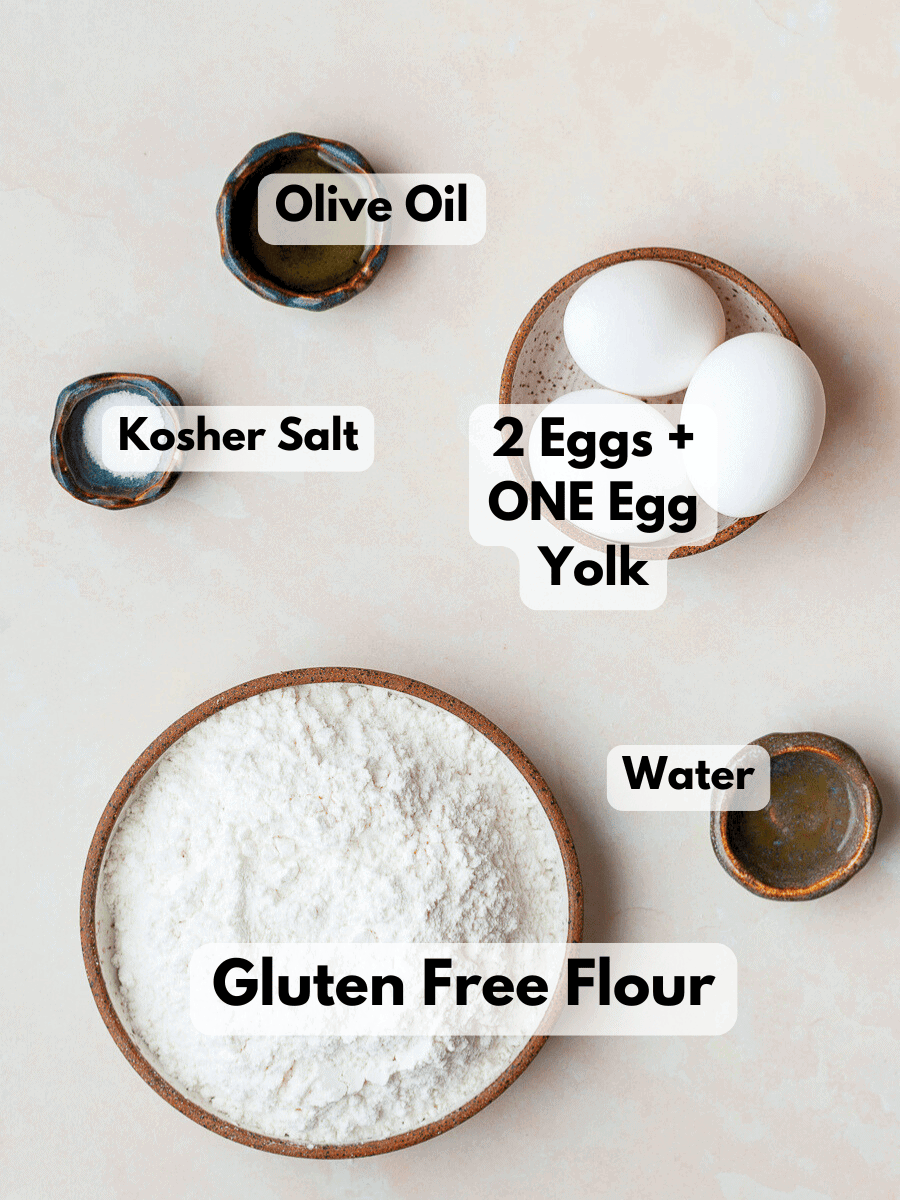
Gluten Free Flour: For the best Gluten Free Pasta, I recommend using my Cup4Cup Copycat Recipe or King Arthur Measure for Measure. Both blends create a dough that’s easy to roll out and cooks up with excellent flavor and texture. It's important to mention that the blends I use in my fresh pasta recipe do contain xanthan gum.
Eggs: Eggs add structure, richness, and flexibility to fresh pasta dough. They help bind the ingredients together and make the dough easier to roll thin without cracking, which is especially helpful when working with gluten free flour. Plus, the yolks give fresh pasta its beautiful golden color and tender bite once cooked. Please make sure to only use TWO whole eggs and ONE yolk.
Olive Oil: I recommend using a good olive oil here, but a neutral oil like grapeseed oil also works. Olive oil adds a touch of richness and helps keep gluten free fresh pasta dough flexible and easy to work with. It improves the dough’s elasticity, making it less likely to crack when rolling, and contributes to a smoother, more tender texture once cooked.
Water: A splash of water adds just enough moisture to hydrate the gluten free flour and create a smooth, cohesive dough that rolls out more easily.
Recommended Tools
You probably already have most of the basic tools you need to make this Gluten Free Fresh Pasta recipe. The only special item you’ll want is some kind of Pasta Roller. While you can roll out the pasta dough with just a rolling pin, you will receive a more even and thinner pasta when using a pasta roller.
Food Processor: Yes, I make my gluten free pasta dough in the food processor. You can make it by hand, but I highly recommend using your Food Processor for the ease of it. A food processor will produce smoother, more cohesive dough that’s much easier to roll out.
A large Mixing Bowl: If you don't own a Food Processor, this pasta dough can, of course, also be made in a large mixing bowl.
A Rolling Pin: I like using a rolling pin to roll out the pieces of pasta before rolling them through the pasta roller. This way they are thinner and it also reduces the chances of the dough ripping.
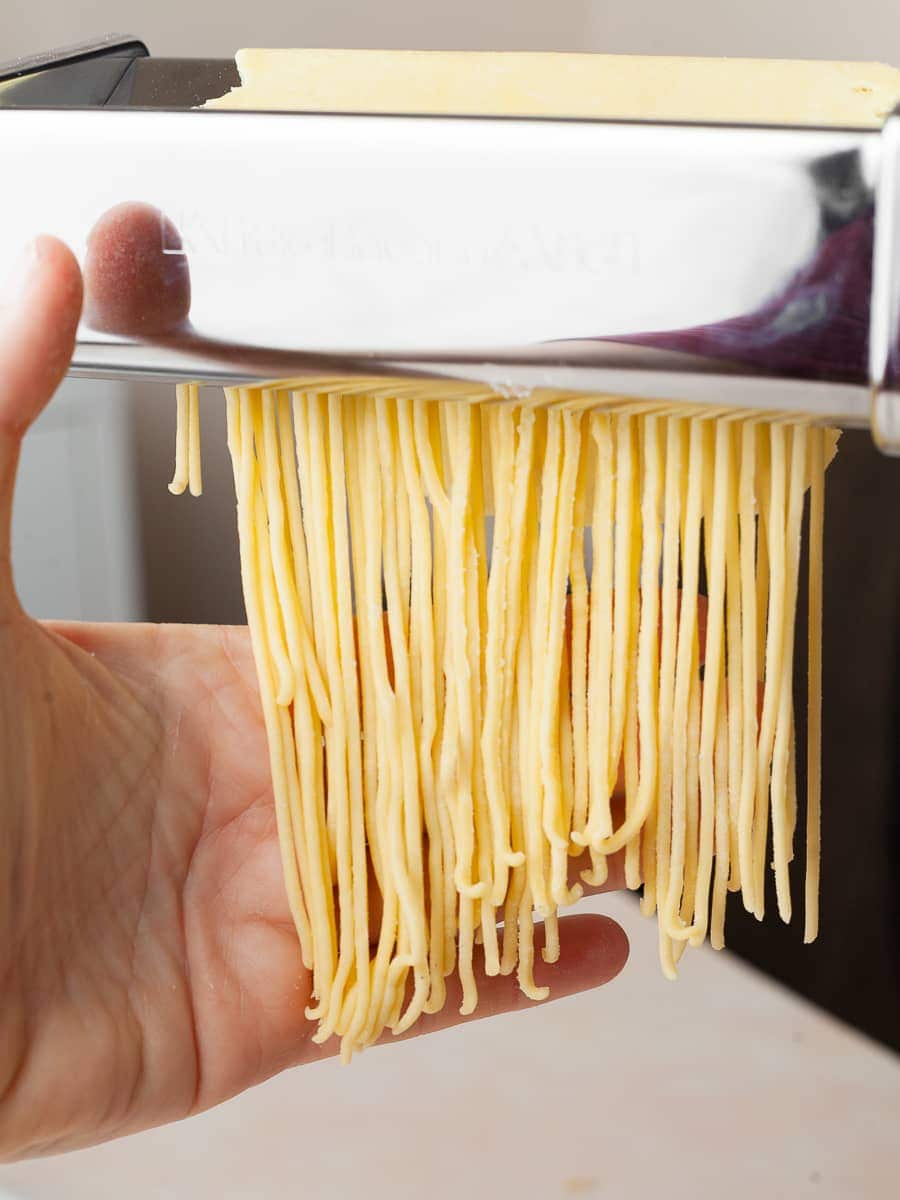
Pasta Roller: I use the KitchenAid Pasta attachments for my KitchenAid Mixer, which include a sheeter, a cutter for fettuccine, and one for spaghetti. A basic Pasta Maker Machine can also be used for this recipe. OR, if you don't want to purchase a specific tool for making pasta, a rolling pin and a pizza cutter will also work. But keep in mind the pasta might be on the thicker side and cook unevenly.
You will also need a digital kitchen scale, a few sheet trays for laying out the fresh pasta and parchment paper to keep the pasta from sticking to the baking tray.
Recipe Testing Notes
This shouldn't surprise anyone, but not all gluten free flour blends behave the same when it comes to making fresh pasta dough. During testing, I found that blends like Bob’s Red Mill 1:1 and my regular gluten free flour blend tend to produce dough that is brittle and hard to roll. For the best texture and easiest handling, I recommend using my Cup4Cup Copycat Recipe or King Arthur Measure for Measure. I have not tested this recipe with Caputo Fioreglut since I wanted to provide an option for those who are also wheat free and not just gluten free.
Another key takeaway from testing this recipe countless times: if you have a food processor, use it. It consistently produces better results than kneading by hand, hydrating the flour more evenly and creating a smoother, more cohesive dough that’s much easier to roll out.
Gluten Free Fresh Pasta Dough By Hand
Making fresh gluten free pasta by hand is very simple, but keep in mind you’ll need to knead the dough for 2–3 minutes to ensure it’s smooth and fully combined. I don’t recommend using a stand mixer for this recipe, as the dough is quite stiff and can strain the motor.
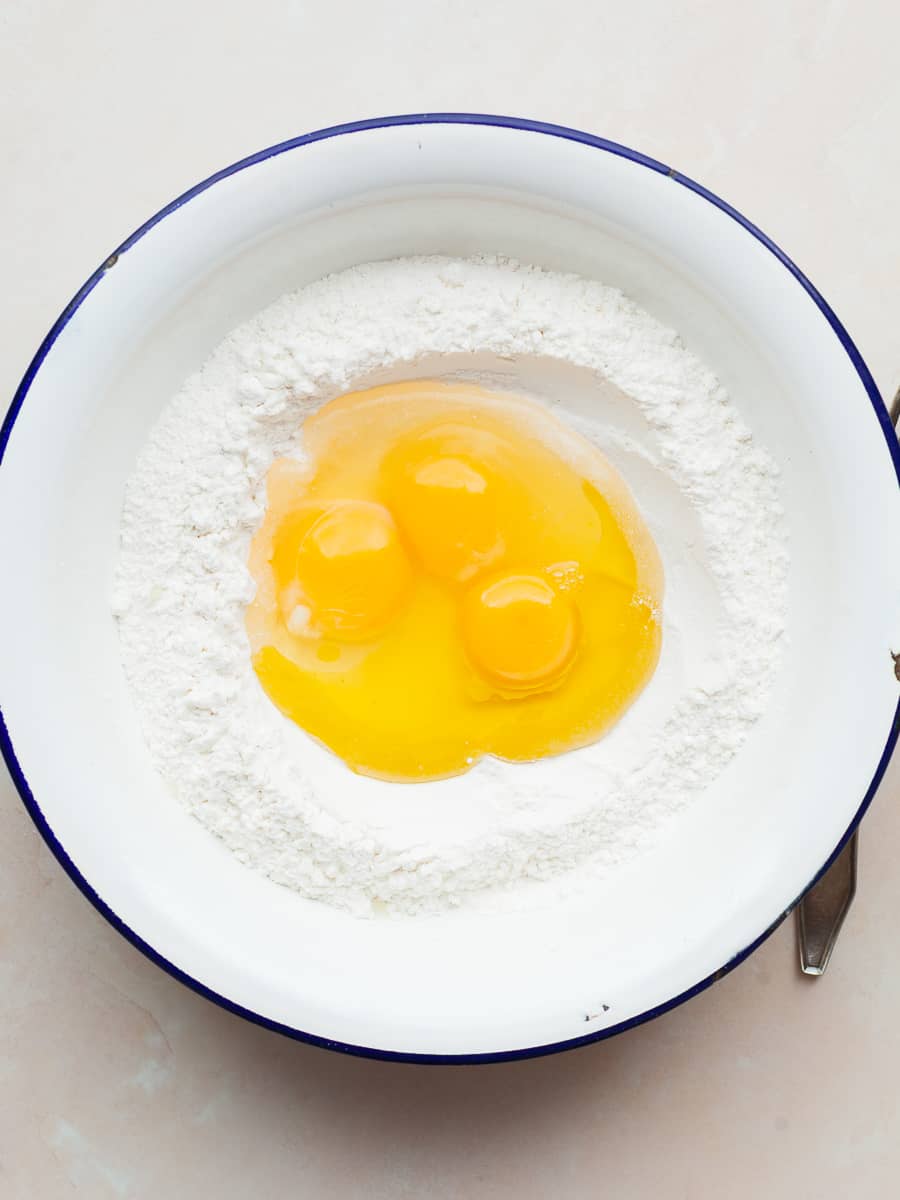
- Step 1: In a large mixing bowl, combine the gluten free flour and kosher salt. Make a well in the center and add the two whole eggs, egg yolk, olive oil, and water.
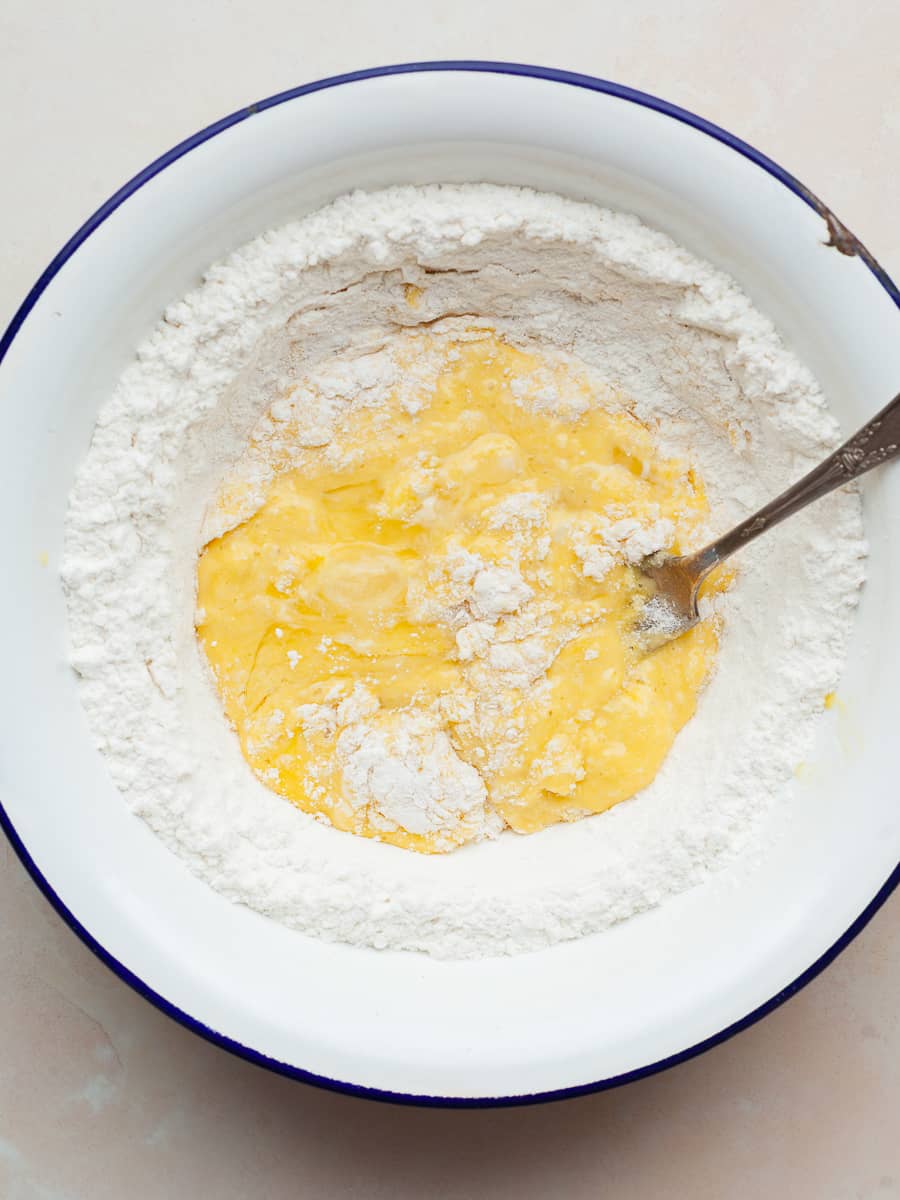
- Step 2: Using a fork, whisk the wet ingredients together, then gradually work in the dry ingredients from the edges of the well.
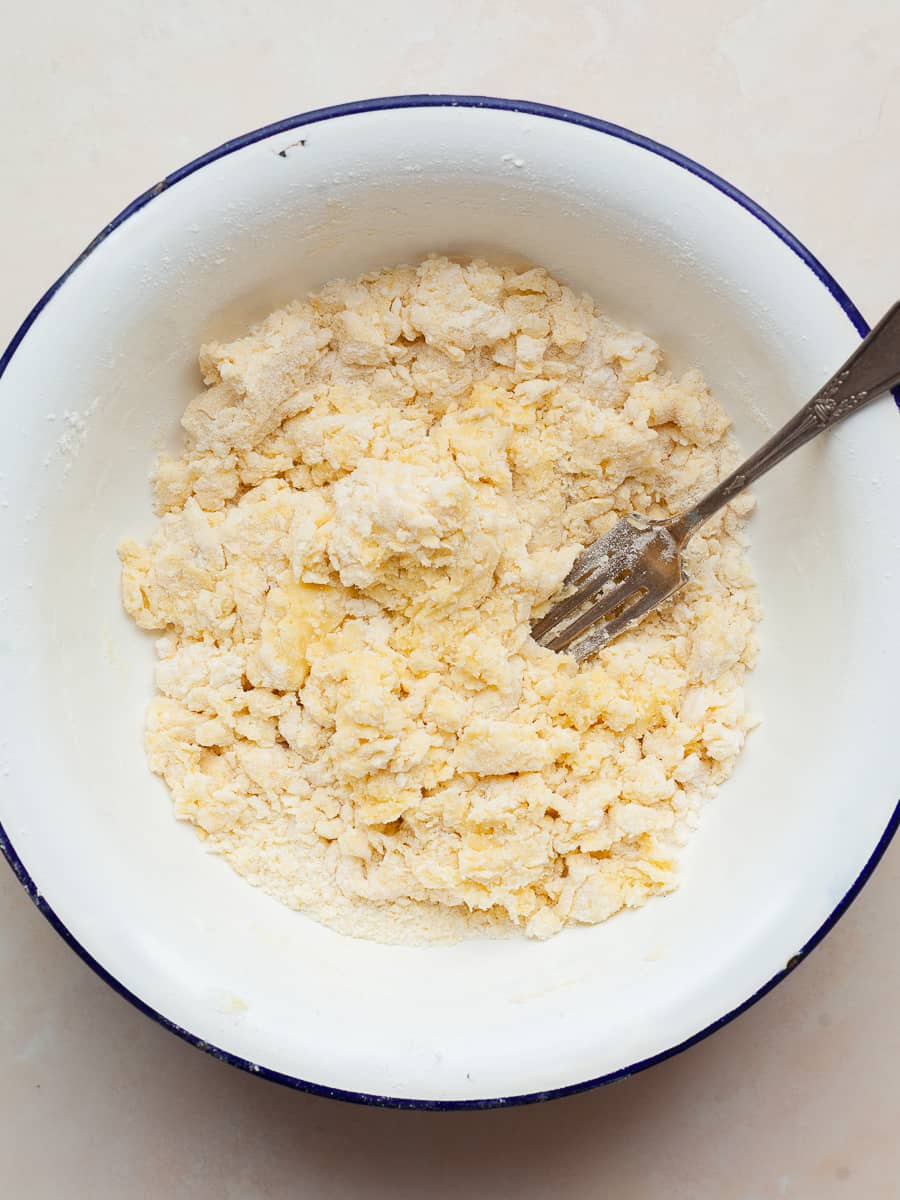
- Step 3: Continue mixing until a shaggy dough forms.
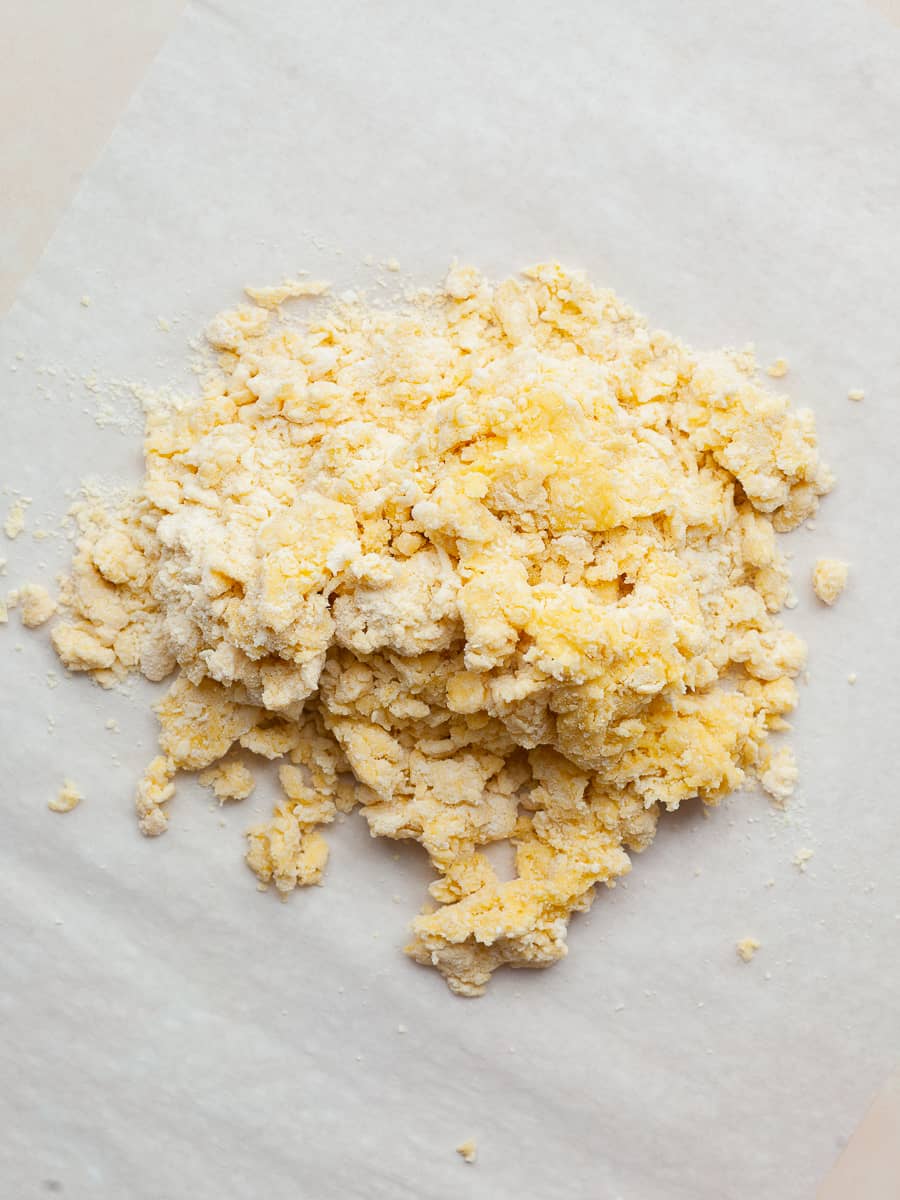
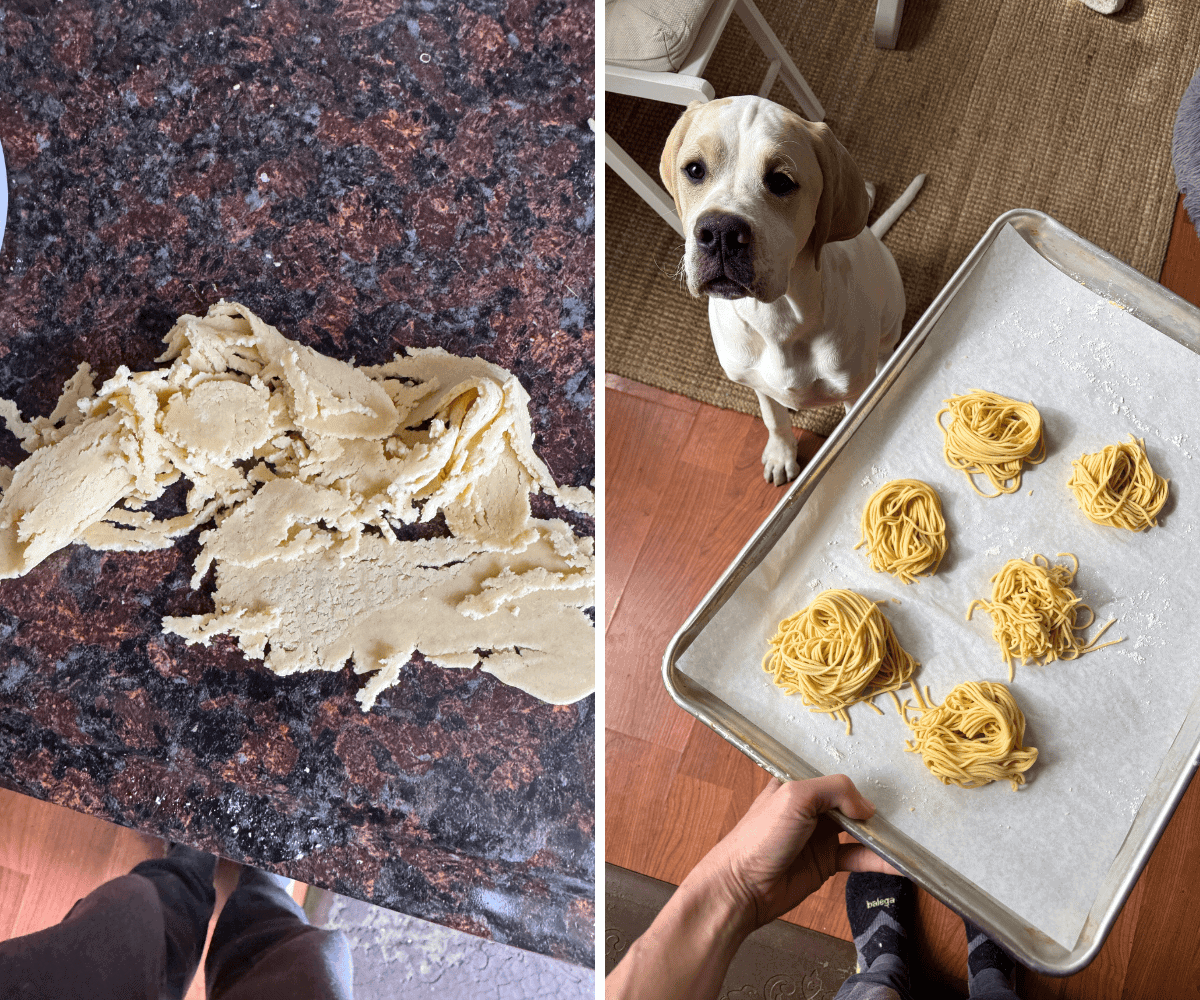
- Step 4: Transfer the dough to a clean work surface. It will look dry and crumbly at this stage
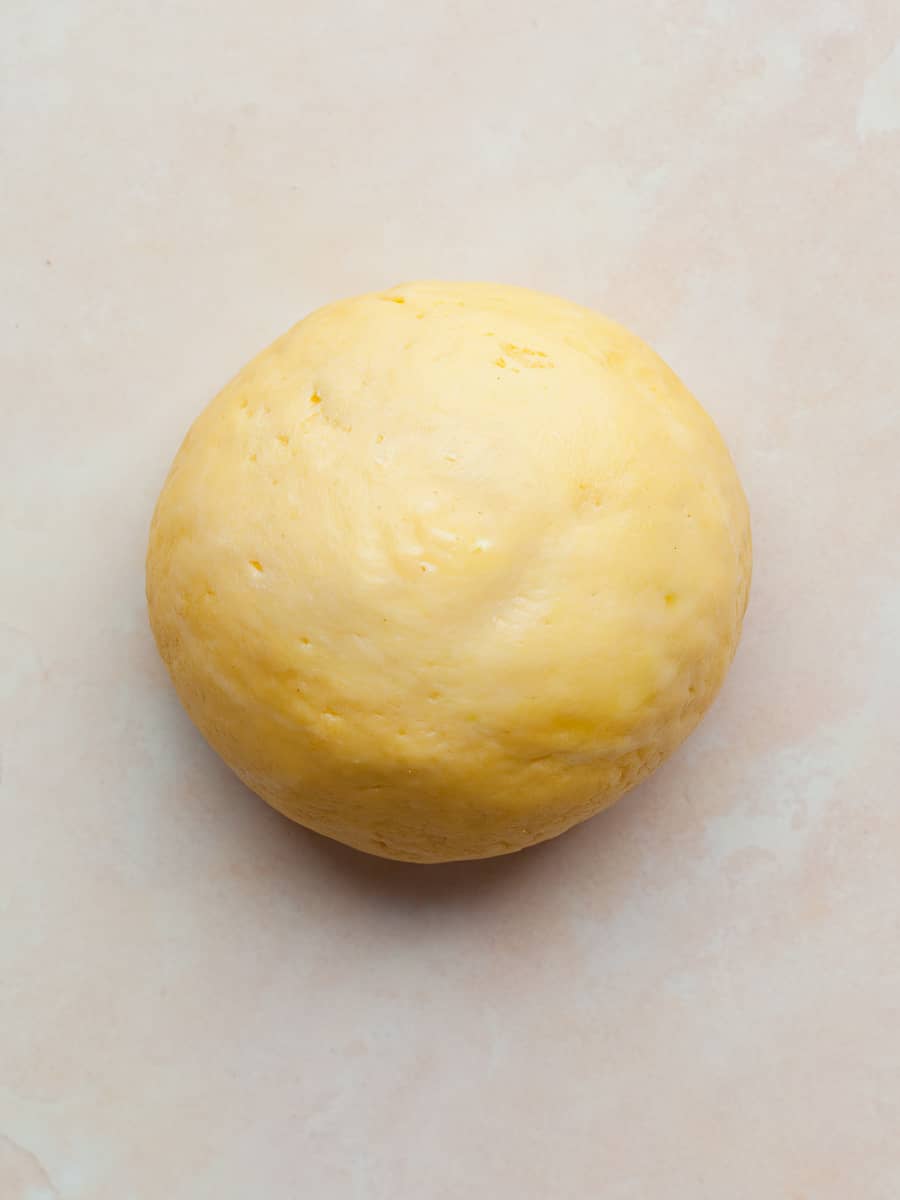
- Step 5: Bring the dough together and knead by hand for about 2–3 minutes, until it becomes smooth and cohesive. The dough should feel firm but pliable, not crumbly. If needed, add a tiny amount of additional water. The amount of water needed can vary depending on which gluten free flour blend is used to make this fesh pasta recipe.
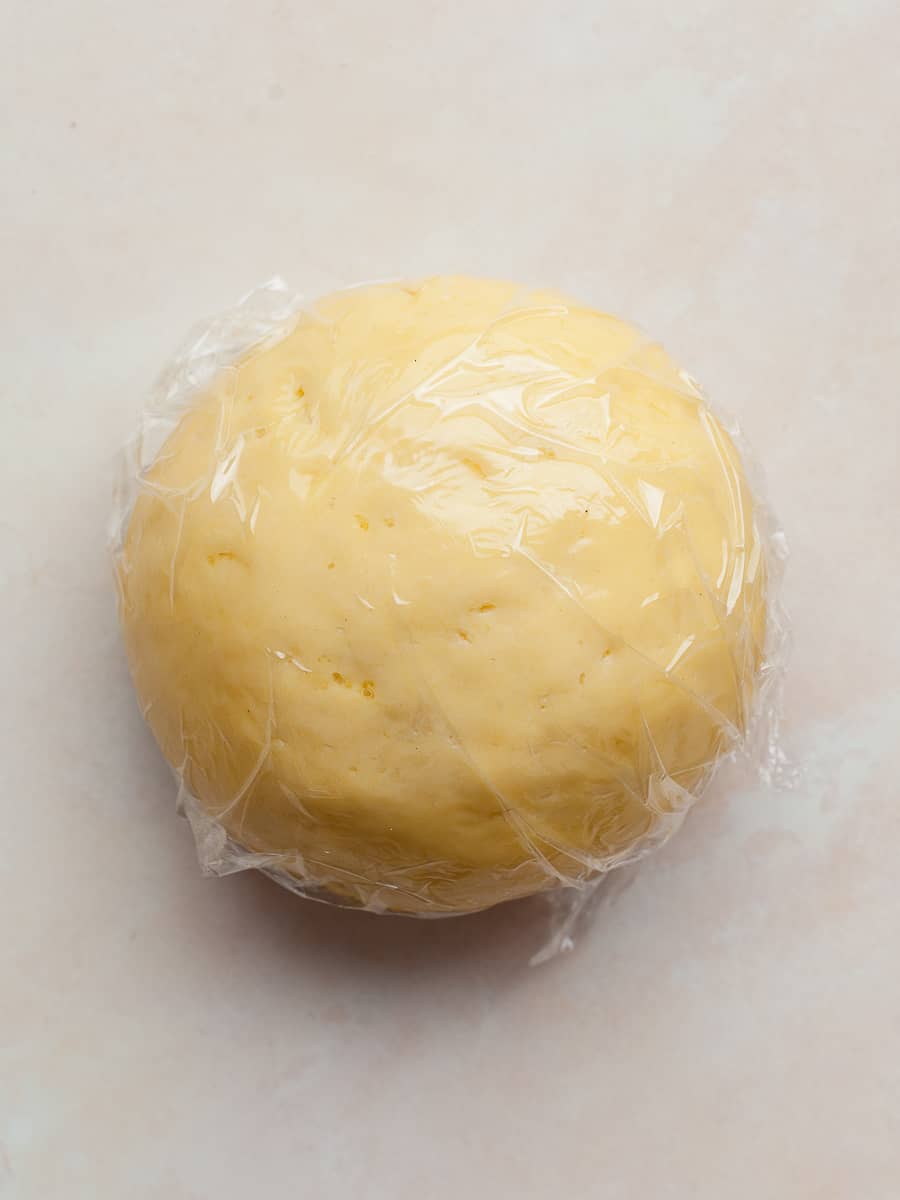
- Step 6: Lightly coat the dough with a little additional olive oil and wrap it tightly in plastic wrap. Refrigerate for at least 30 minutes to allow the dough to rest and fully hydrate.
How to make Pasta Dough with a Food Processor
If you have a food processor, I highly recommend using it to make fresh pasta dough. It hydrates the flour more evenly and consistently creates a smoother, more cohesive dough that is much easier to roll out.
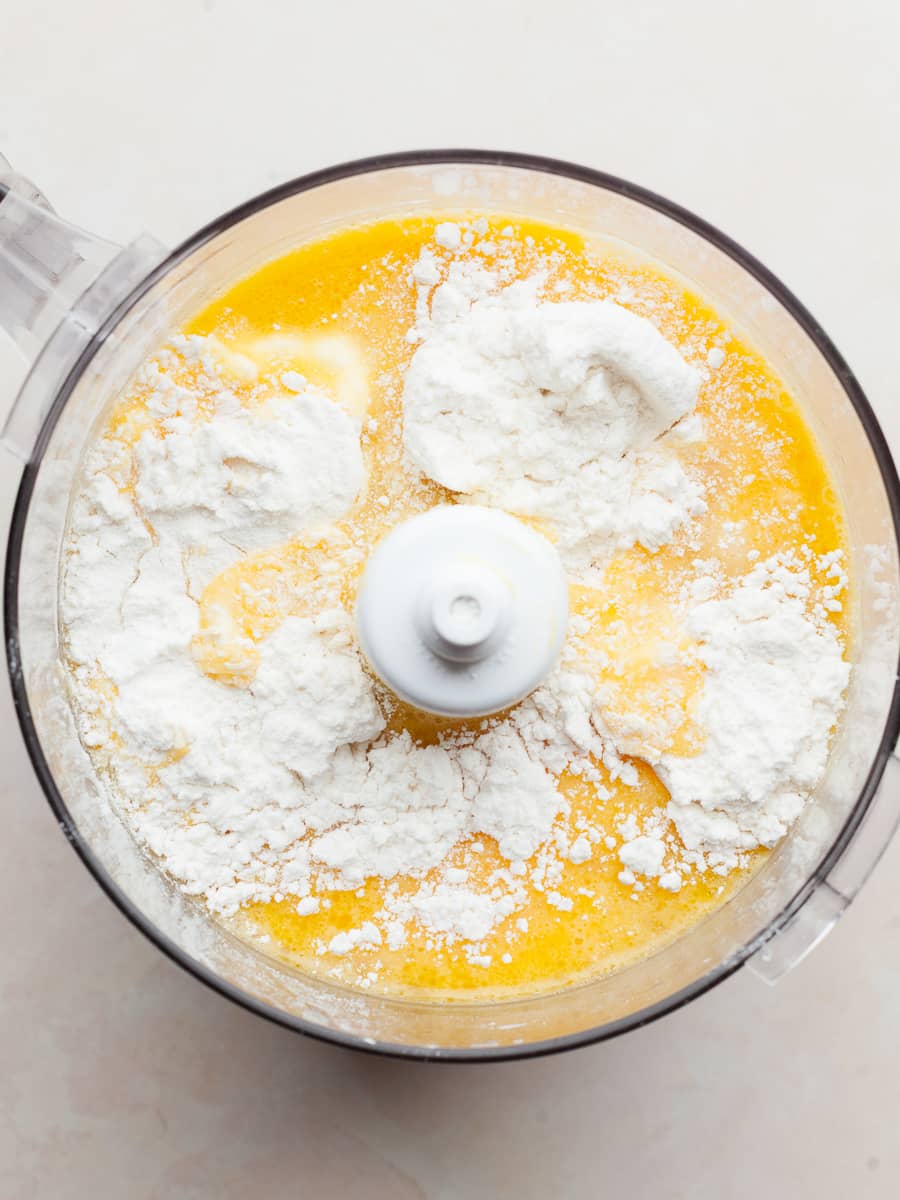
- Step 1: Place the gluten free flour and kosher salt in the bowl of a food processor fitted with the blade. Pulse briefly to combine.
- Step 2: In a separate bowl, whisk together two whole eggs, egg yolk, olive oil, and water.
- Step 3: Add the wet ingredients to the food processor.
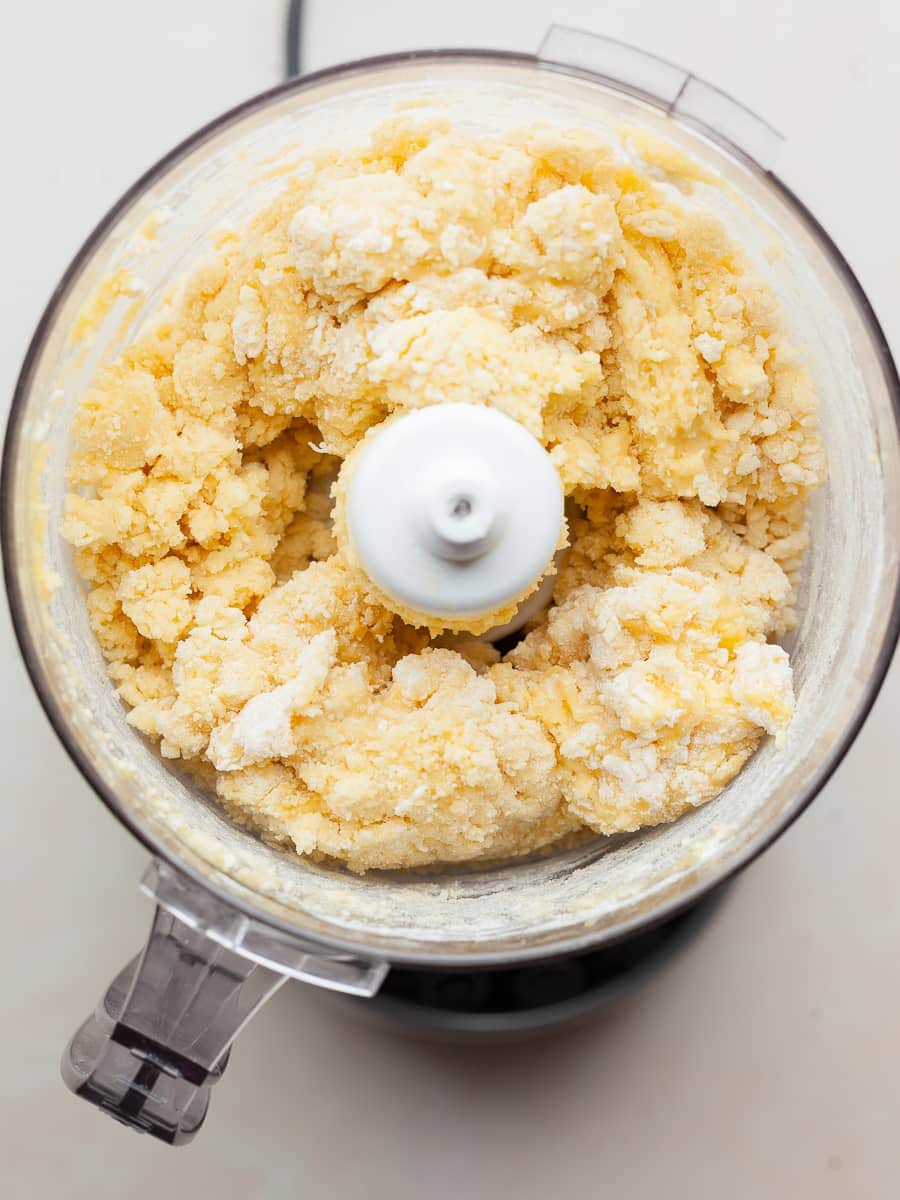
- Step 4:Pulse several times, then run the processor until the mixture forms small clumps and begins to come together. The dough will look slightly crumbly but should hold when pressed between your fingers.
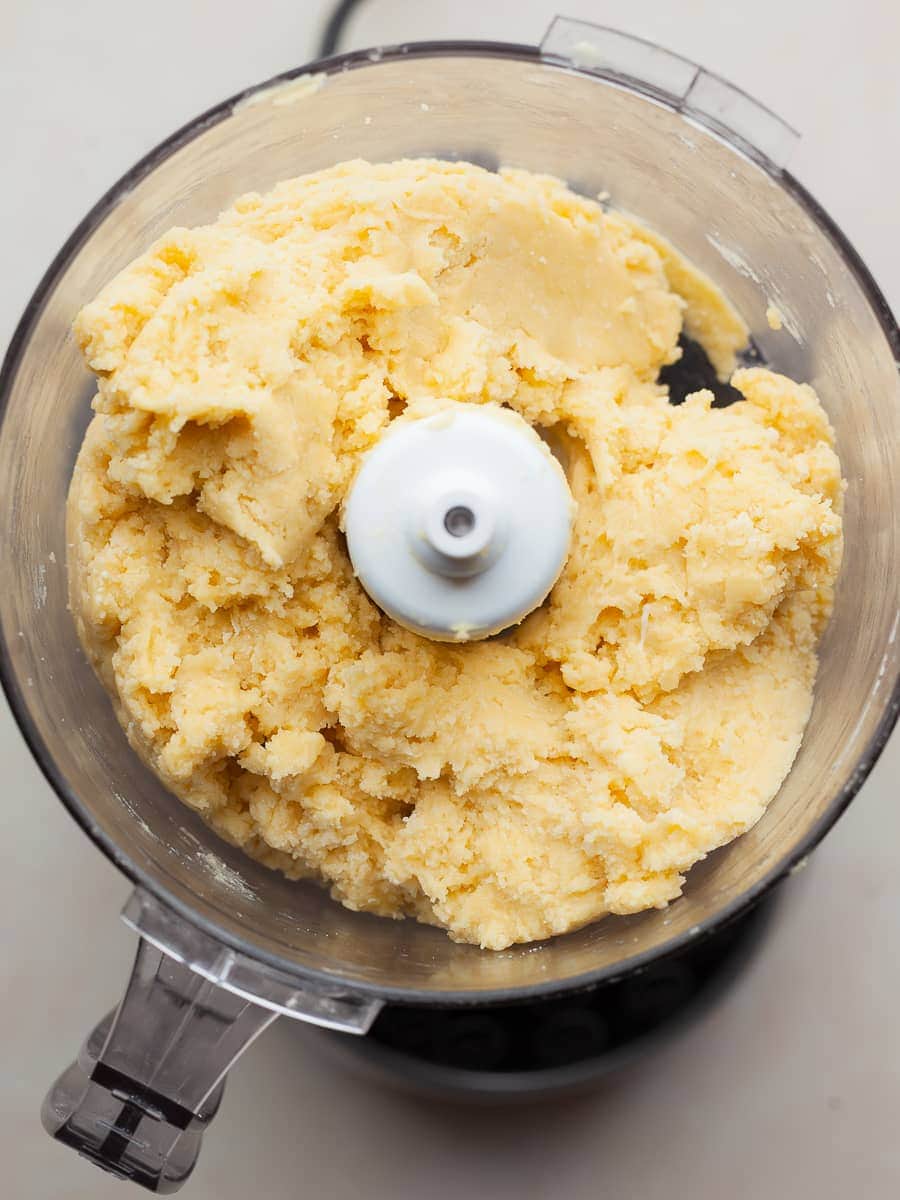
- Step 5: Puls until a smooth pasta dough has formed.
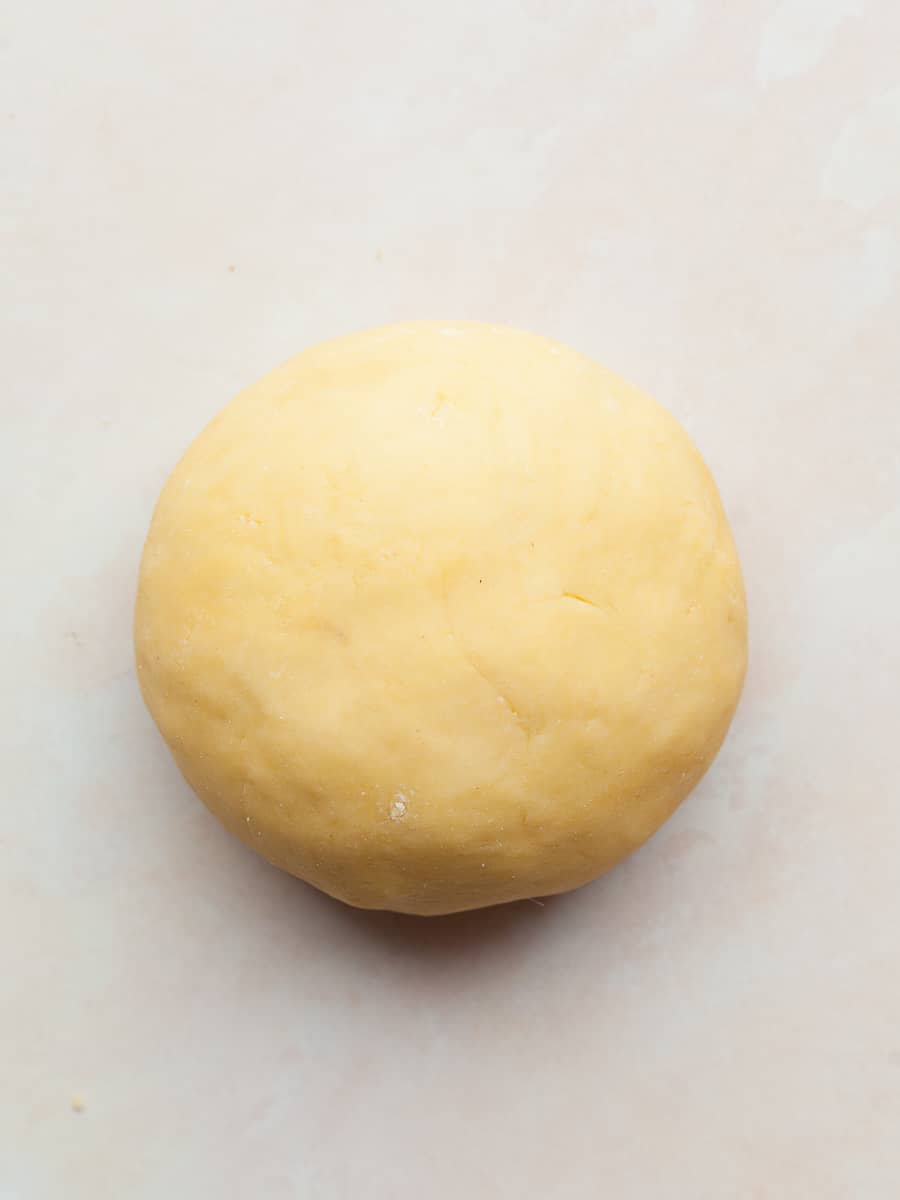
- Step 6: Turn the dough out onto a clean work surface. Knead by hand for about 1 minute, just until smooth and cohesive.
- Step 7: Lightly oil the dough, wrap tightly in plastic wrap. Refrigerate for at least 30 minutes to allow the dough to fully hydrate.
Troubleshooting Gluten Free Pasta Dough
- If the dough is too dry or crumbly: Add water 1 teaspoon at a time and knead briefly until the dough comes together. Gluten free dough often needs small moisture adjustments depending on which gluten free flour blend is being used.
- If the dough is too sticky: Dust lightly with additional gluten free flour and knead gently until the dough is smooth and manageable. Avoid adding too much flour at once. Remember, gluten free flour needs to hydrate so I always recommend allowing the dough to rest before adding additional flour.
- If the dough cracks when rolling: It likely needs more hydration or rest time. Knead in a tiny splash of water and allow the dough to rest longer.
- If the dough feels tough or stiff: Let it rest longer. This gives the flour time to fully hydrate and will make rolling much easier.
How to roll out and cut Gluten Free Fresh Pasta
I use the pasta attachments for my KitchenAid mixer to roll out the fresh pasta dough. If you’re using a different type of pasta machine or roller, follow the manufacturer’s instructions for best results.
Make sure to prepare two sheet trays for the rolled out pasta. One for the pasta sheets and one for the final pasta shape. I like to line my sheet trays with parchment paper and lightly dust it with flour to prevent sticking.
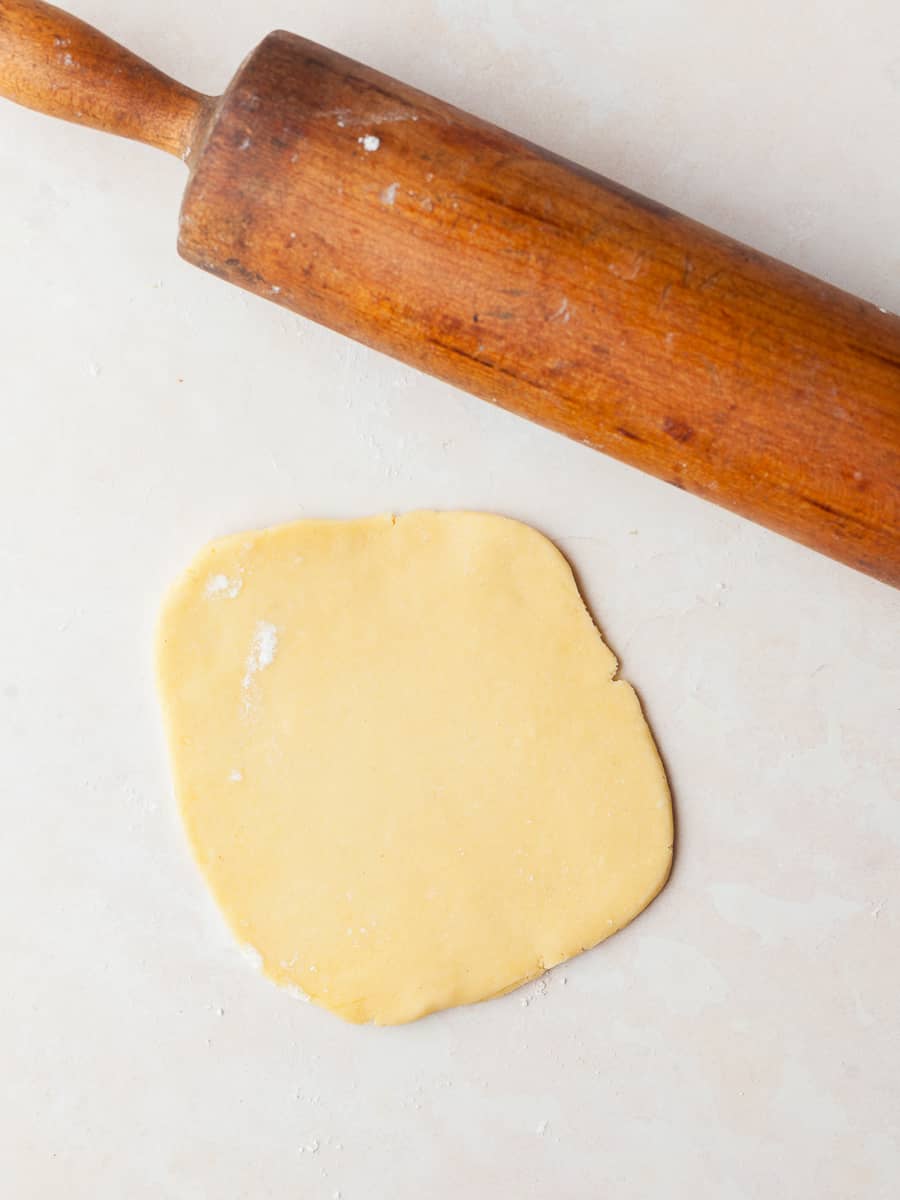
- Step 1: Lightly flour your work surface to prevent sticking. Divide the dough into smaller portions to make it easier to handle. I like to divide it into 6 smaller pieces. Keep any dough you’re not using wrapped to keep it from drying out.
- Step 2: Use a rolling pin to roll the pasta dough into a flat rectangle, about ¼ inch thick.
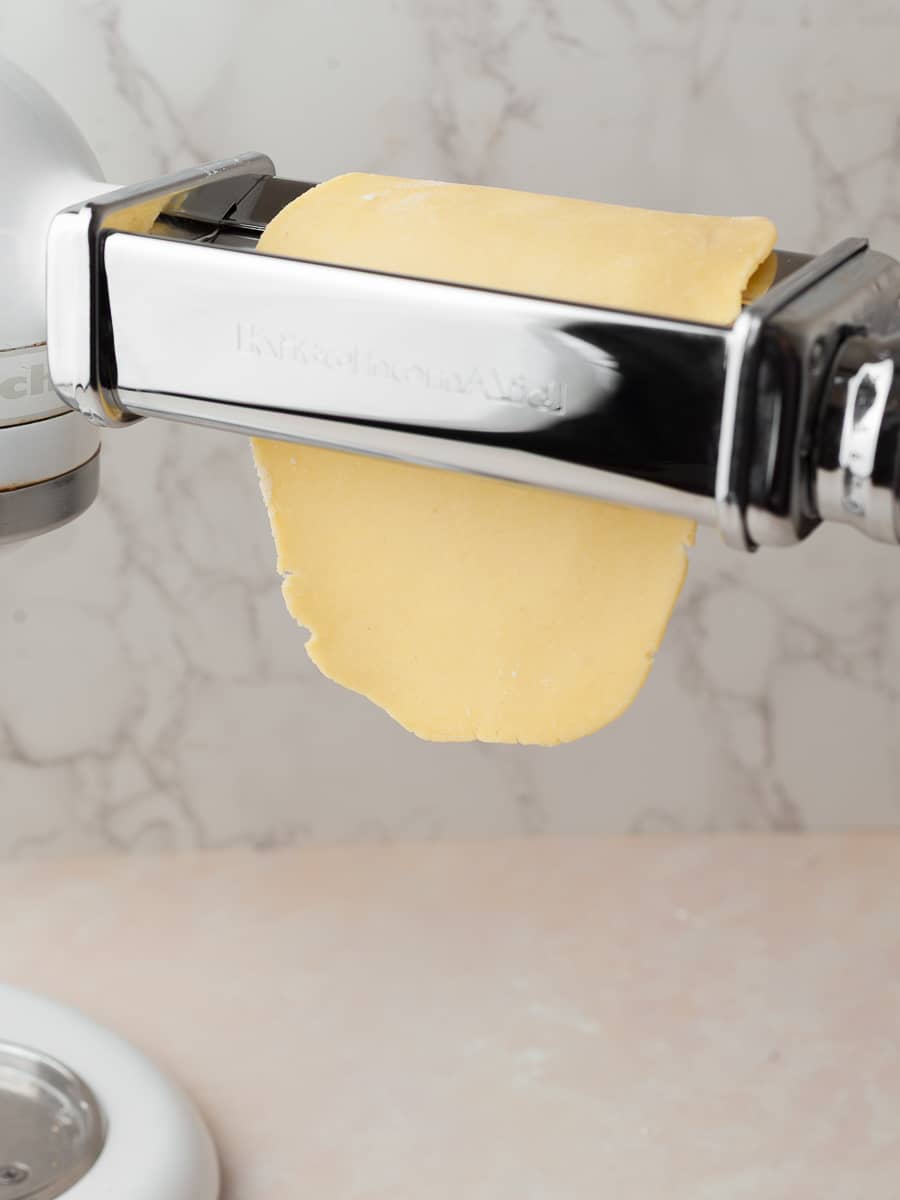
- Step 3: Feed the dough through the pasta roller on the widest setting. If the dough is too thick, it may rip into pieces so keep that in mind.
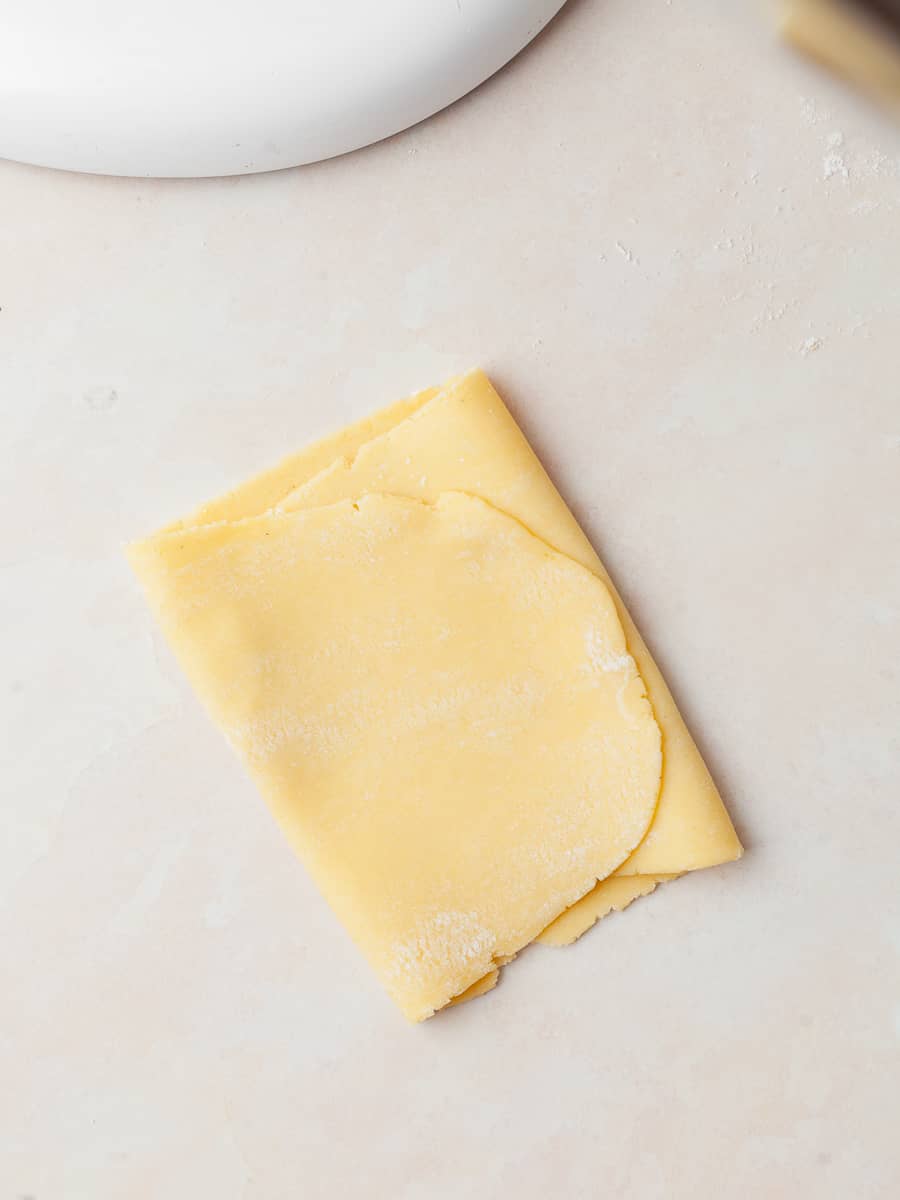
- Step 4: Fold the dough into thirds, like a book fold. Folding and rolling a few times helps create pasta sheets that are consistent in thickness and ready for cutting.
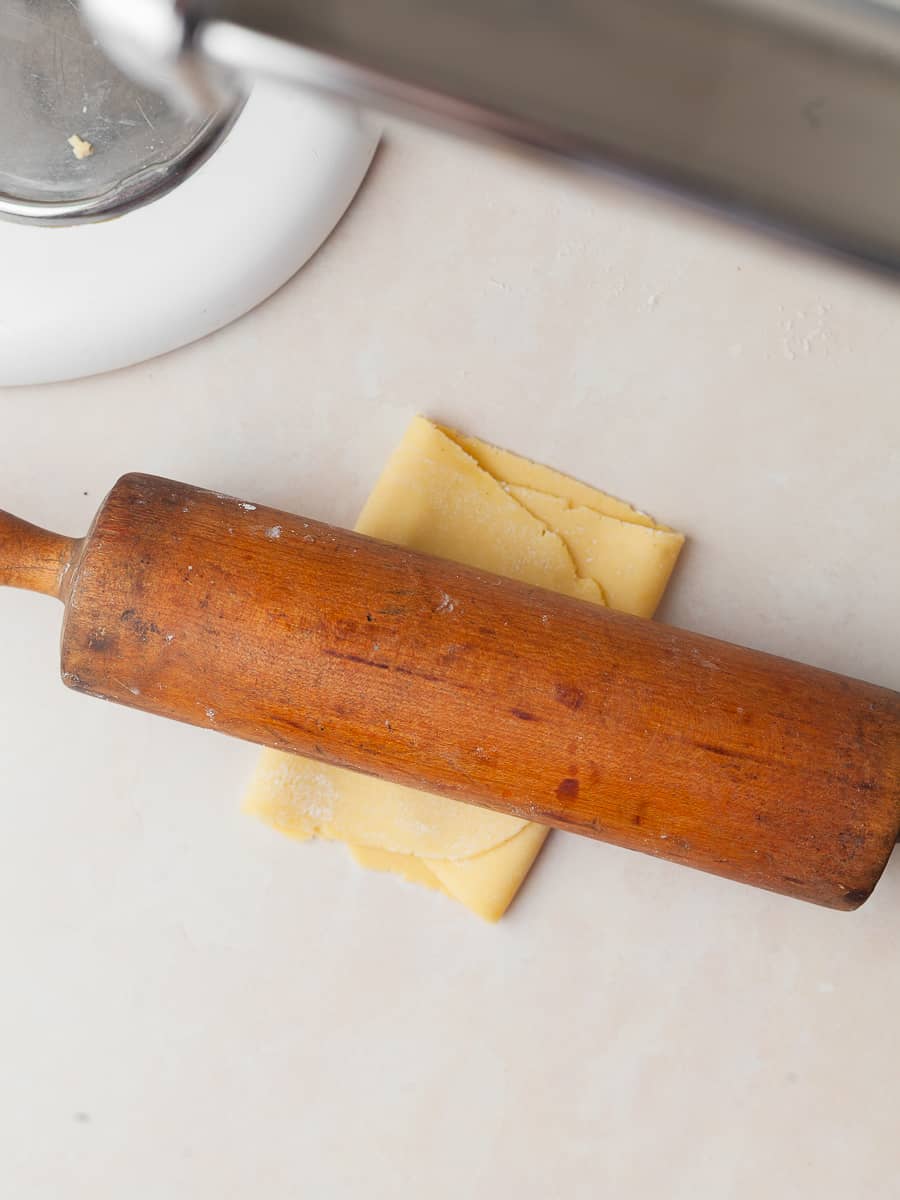
- Step 5: Roll the dough out to about ¼ inch thickness. Then pass it through the pasta roller on the widest setting again.
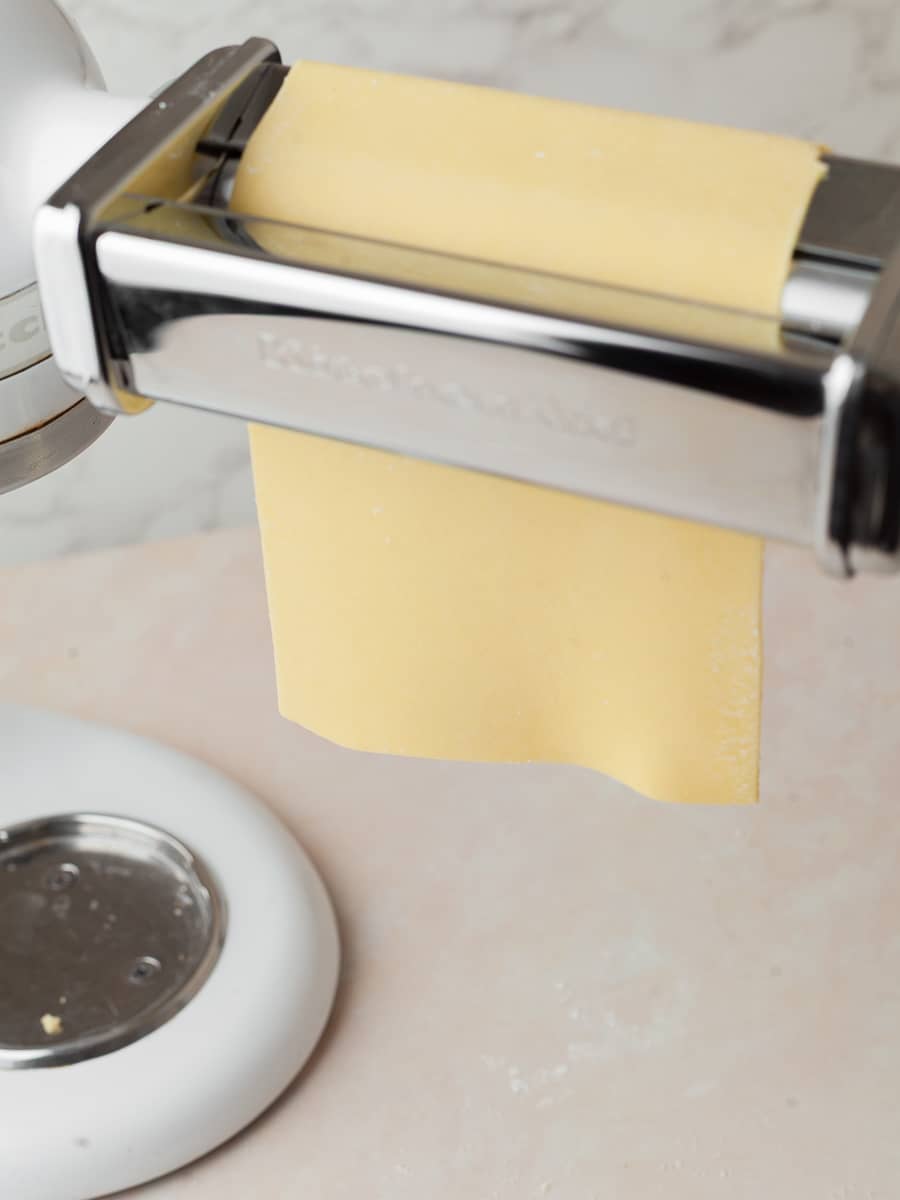
- Step 6: Gradually reduce the roller setting and pass the dough through each thinner setting until you reach your desired thickness. I prefer a slightly thicker sheet for spaghetti (Setting 2) and a thinner sheet for fettuccini (Setting 4). Remember, fresh pasta tends to thicken slightly when cooked.
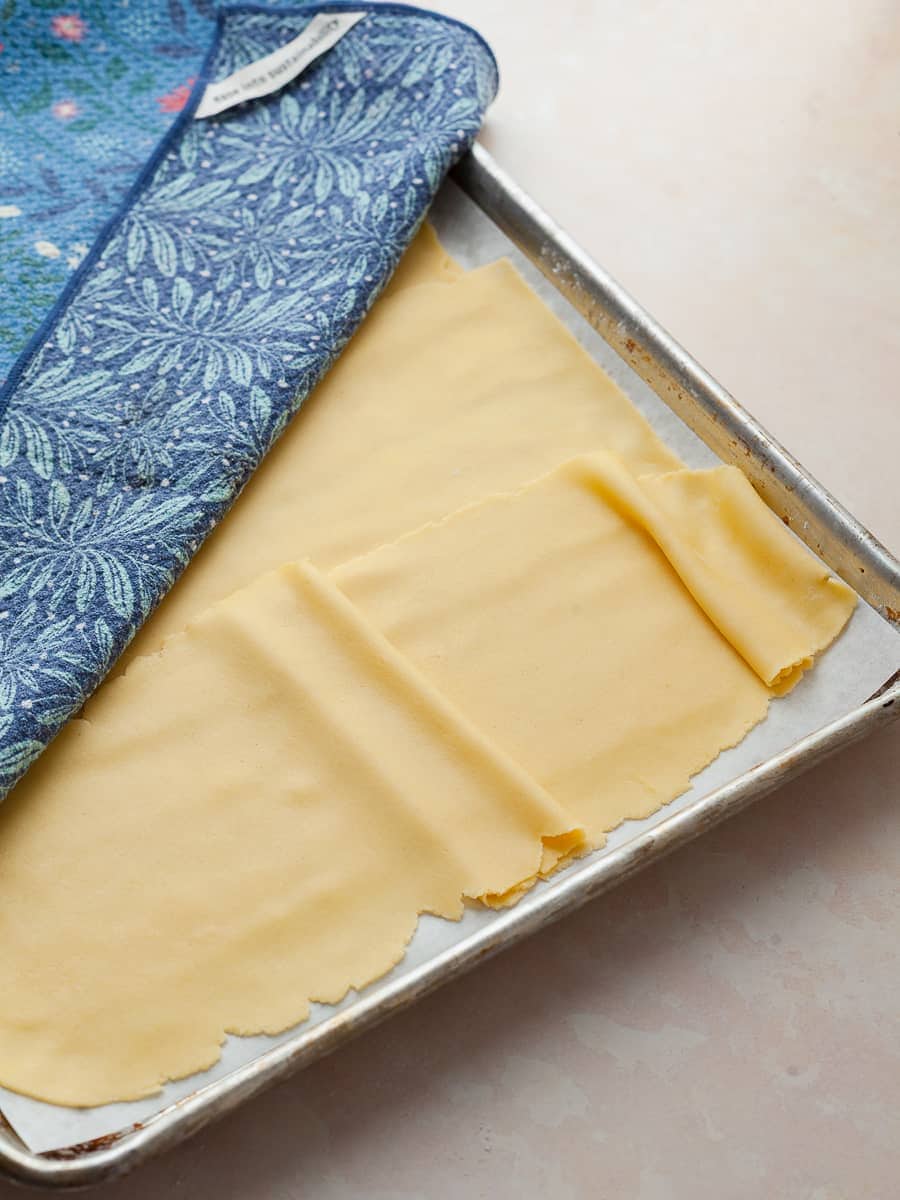
- Step 7: Place rolled-out pasta sheets on a lightly floured sheet tray. Cover them with a clean towel while you roll the remaining dough.
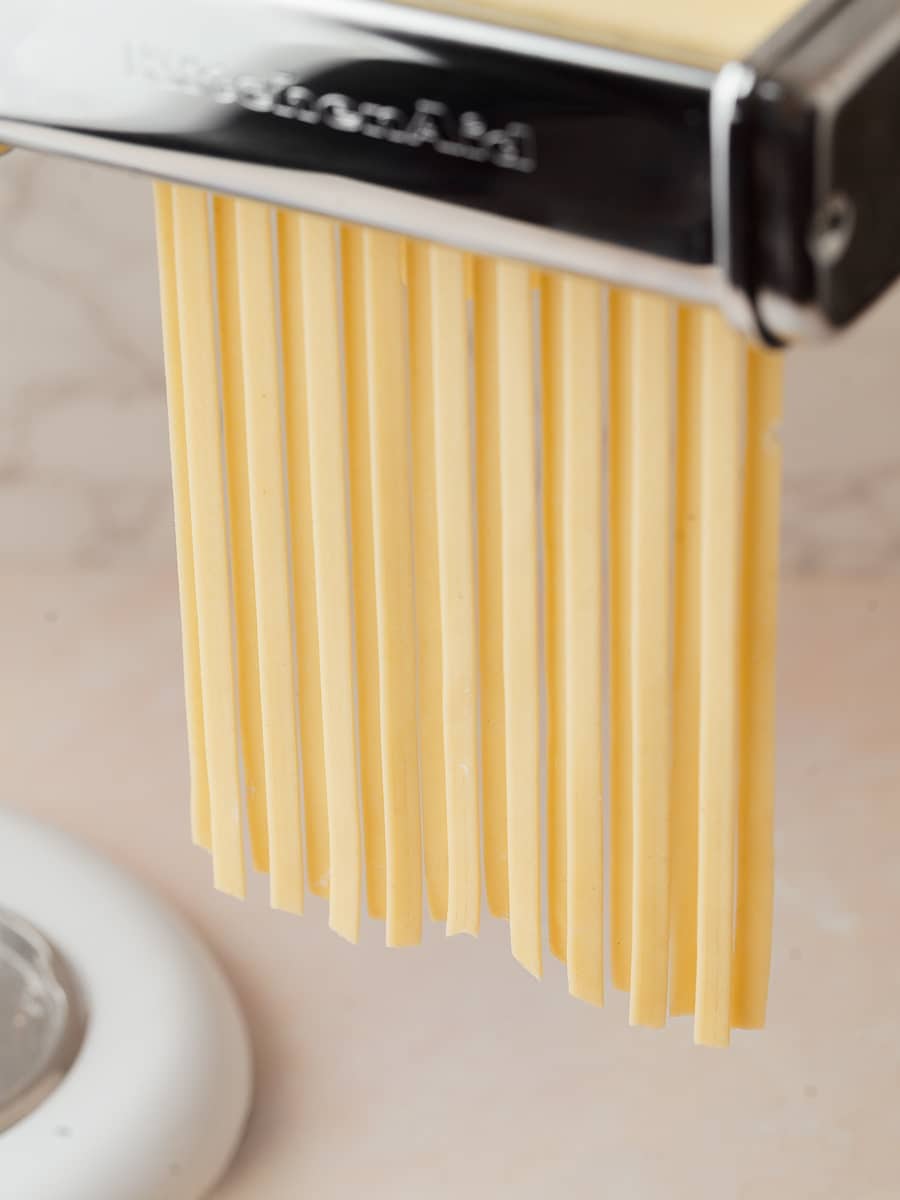
- Step 8: Attach your desired cutter to the pasta roller. Most attachments or machines include fettuccine or spaghetti options.
- Step 9: Feed the sheet through the cutter slowly, using a steady speed. Guide the pasta with your hands as it comes out.
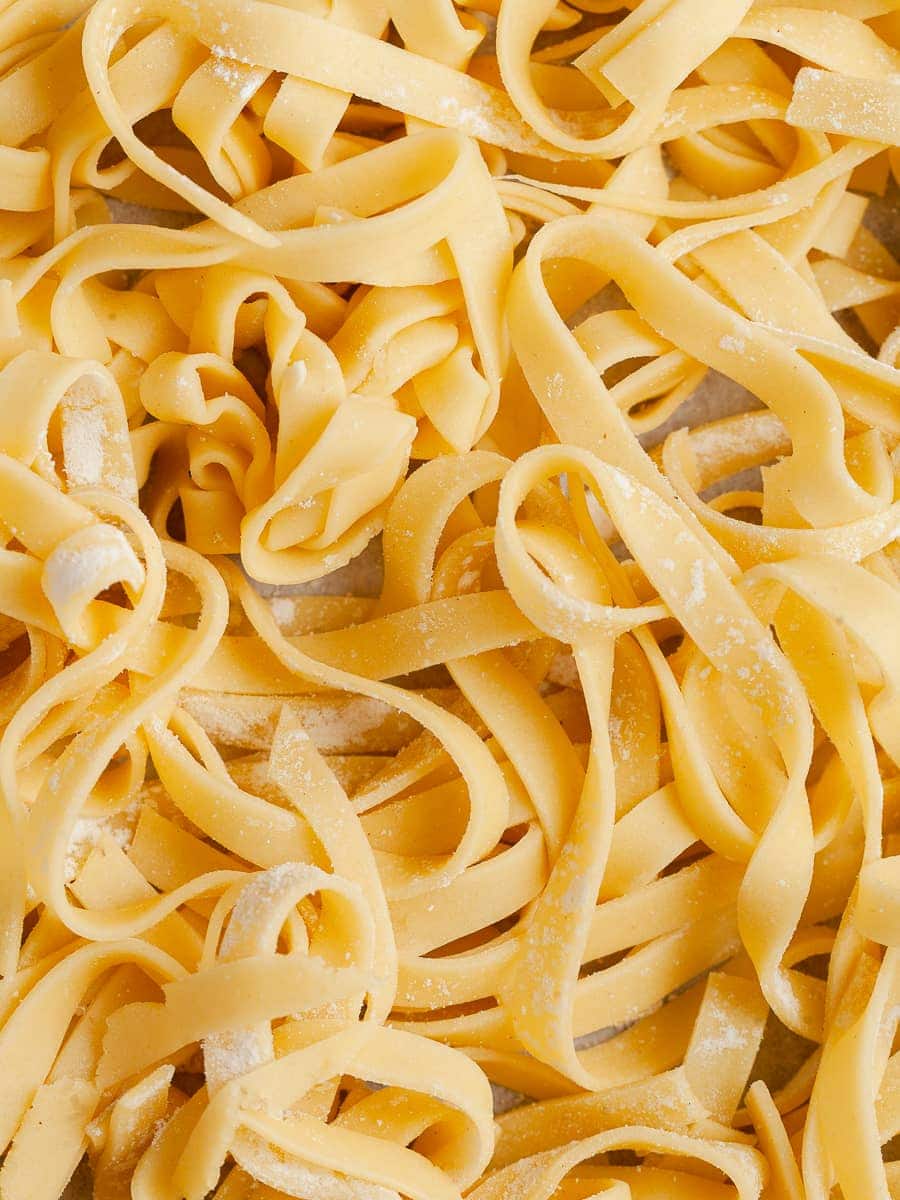
- Step 10: Lay the fresh cut gluten free pasta out on a prepared sheet tray.
- Step 11 (OPTIONAL): Let the cut noodles rest for 10 -15 minutes if you want them a bit firmer before cooking.
How to cook Gluten Free Fresh Pasta
- Boil plenty of water: Bring a large pot of water to a rolling boil. Use about 4 - 6 quarts of water and generously salt it. This is your only chance to season the pasta itself.
- Add the pasta gently: Carefully add your fresh pasta to the boiling water. Stir immediately to prevent sticking.
- Cook briefly: Fresh pasta cooks much faster than dried. Most noodles are done in 2 - 4 minutes, depending on thickness. Taste a strand to check for doneness - it should be tender but still have a slight bite (al dente).
- Drain carefully: Reserve a little pasta water if you want to loosen your sauce, then drain the pasta gently in a colander.
- Serve immediately: Fresh pasta is best enjoyed right away with your favorite sauce, olive oil, or butter.
Storage and Freezing
- Short Term: Fresh gluten-free pasta can be stored in the refrigerator for up to 2 days. Keep it in an airtight container or lightly dusted with flour on a tray, covered with plastic wrap or a clean kitchen towel to prevent drying.
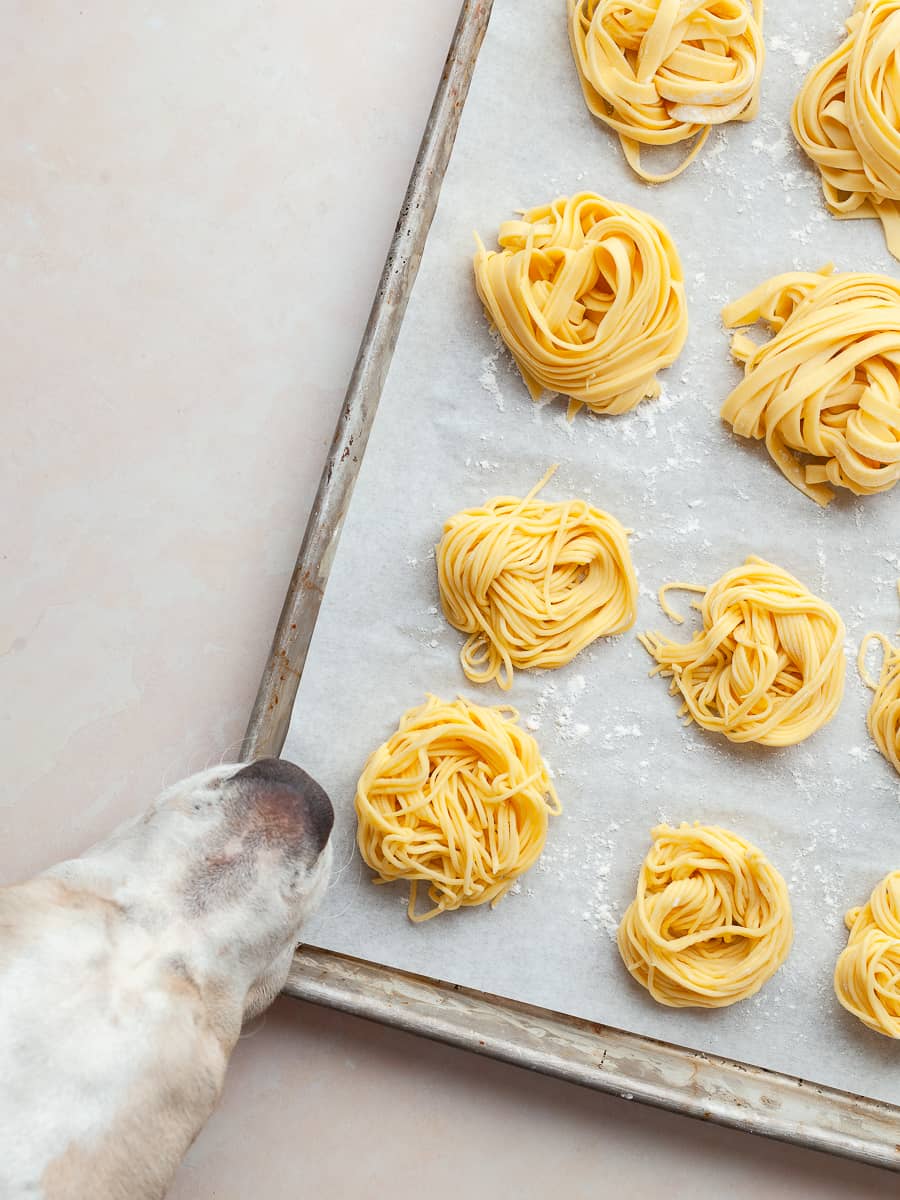
- Freezing: To freeze fresh pasta, lay the cut noodles or shaped pasta on a parchment-lined tray, making sure the pieces aren’t touching. Freeze until firm (about 1–2 hours), then transfer to a freezer-safe bag or container. Frozen pasta can be cooked straight from the freezer - just add few minutes the cooking time.
- Drying: Because of the raw eggs being used in this gluten free pasta dough I don't recommend air drying it. Better safe than sorry.
Note about Salt in my Recipes
I use Diamond Kosher Crystal Salt in all of my recipes unless otherwise stated. If use use a different brand or kind of salt in your kitchen please adjust accordingly since some salts can be saltier. If you use Morton’s Kosher Salt please be aware that their salt granules are smaller in size, denser, and crunchier and twice as salty.
Baking in grams
I share my recipes in grams and by weight since baking by weight is the most accurate way to bake. Digital Scales are very affordable and easy to use. You can purchase them on Amazon for less than a set of measuring cups. For small amounts under 10 grams, I like to use this Precision Pocket Scale. Measuring cups are very inaccurate which can cause significant errors when it comes to gluten-free baking or baking in general. Especially since I bake with gluten-free flours which weigh differently than “regular” flours. I do provide some ingredients like spices and leavening agents in measuring spoons. To learn more about Baking with a digital scale, make sure to check out my post about Baking by weight.
Note about Ovens and Oven Temperatures
All my recipes are tested and developed with a conventional oven. I always bake my baked goods on the rack placed in the MIDDLE of my oven. This way the heat coming from the bottom will not burn my baked goods.
If you are baking with convection (fan-forced), please adjust the recipes accordingly. Convection oven can cause baked goods to dry out quickly and still be raw inside. Since takes at least 15-20 minutes for a standard American Oven to be fully preheated. I highly recommend investing in an Oven Thermometer.
Substitutions and Modifications
Any dietary or ingredient modifications/substitutions to this recipe may alter the end result in appearance and taste. I test my recipes several times as published in this post and The Gluten Free Austrian Blog is not responsible for the outcome of any recipe you find on our website.
More Gluten Free Savory Recipes to try


📖 Recipe
Gluten Free Fresh Pasta Dough

Making Gluten Free Fresh Pasta at home is easier than you think. Follow this recipe for dough that rolls beautifully and noodles that cook up tender without falling apart.
Ingredients
Gluten Free Fresh Pasta
- 225 grams Gluten Free Flour (Preferably my Cup4Cup Copycat Recipe - See Note)
- ½ teaspoon kosher salt
- 2 large eggs (around 110 grams, 55-58 grams per egg)
- 1 large egg yolk (around 20 grams)
- 15 grams olive oil
- 5-10 grams water (around 1-2 teaspoons - See Note)
Instructions
Gluten Free Pasta Dough
This Gluten Free Fresh Pasta Dough can be made by hand or with a food processor.
Gluten Free Fresh Pasta Dough By Hand
- In a large mixing bowl, combine the gluten free flour and kosher salt. Make a well in the center and add the two whole eggs, egg yolk, olive oil, and water.
- Using a fork, whisk the wet ingredients together, then gradually incorporate the dry ingredients from the edges of the well.
- Continue mixing until a shaggy dough forms.
- Transfer the dough to a clean work surface. It will look dry and crumbly at this stage - that’s normal.
- Bring the dough together and knead by hand for 2–3 minutes, until smooth and cohesive. The dough should feel firm but pliable, not crumbly. If needed, add a tiny splash of water, as the exact amount can vary depending on the gluten free flour blend used.
- Lightly coat the dough with a little additional olive oil and wrap tightly in plastic wrap. Refrigerate for at least 30 minutes to allow the dough to rest and fully hydrate.
Gluten Free Pasta Dough with Food Processor
- Place the gluten free flour and kosher salt in the bowl of a food processor fitted with the blade. Pulse briefly to combine.
- In a separate bowl, whisk together the two whole eggs, egg yolk, olive oil, and water.
- Add the wet ingredients to the food processor.
- Pulse several times, then run the processor until the mixture forms small clumps and begins to come together. The dough will look slightly crumbly but should hold when pressed between your fingers.
- Continue processing just until a smooth dough forms. The dough should feel firm, slightly tacky, and hold together easily without sticking to your hands.
- Turn the dough out onto a clean work surface and knead by hand for about 1 minute, just until smooth and cohesive.
- Lightly oil the dough and wrap tightly in plastic wrap. Refrigerate for at least 30 minutes to allow the dough to fully hydrate.
How to roll and cut Fresh Gluten Free Pasta Dough
I use the pasta attachments for my KitchenAid mixer to roll out the dough, but any pasta machine will work. Just follow the manufacturer’s instructions for best results. Before you start, prepare two sheet trays: one for the pasta sheets and one for the finished pasta. Line them with parchment paper and lightly dust with flour to prevent sticking.
- Lightly flour your work surface. Divide the dough into smaller portions (I like 6 pieces) to make it easier to handle. Keep any unused dough wrapped to prevent drying.
- Use a rolling pin to flatten each portion into a rectangle about ¼ inch thick.
- Feed the dough through the pasta roller on the widest setting. If the dough is too thick, it may tear, so don’t force it.
- Fold the dough into thirds, like a book fold. Folding and rolling a few times helps create smooth, even pasta sheets.
- Roll the dough again to about ¼ inch thick, then pass it through the widest roller setting once more.
- Gradually reduce the roller setting, passing the dough through each thinner setting until you reach your desired thickness. I prefer Setting 2 for spaghetti and Setting 4 for fettuccine. Keep in mind that fresh pasta thickens slightly when cooked.
- Place the rolled pasta sheets on a lightly floured sheet tray. Cover with a clean towel while you finish rolling the remaining dough.
- Attach your desired cutter to the pasta roller. Most machines include spaghetti or fettuccine options.
- Feed the pasta sheet through the cutter slowly and steadily, guiding the noodles gently as they come out to prevent sticking or tearing.
- Lay the freshly cut pasta on the prepared sheet tray.
- Let the cut noodles rest for 10–15 minutes if you want them slightly firmer before cooking. (Optional)
How to cook Gluten Free Fresh Pasta
- Bring a large pot of water to a rolling boil. Use about 4 - 6 quarts of water and generously salt it. This is your only chance to season the pasta itself.
- Carefully add your fresh pasta to the boiling water. Stir immediately to prevent sticking.
- Fresh pasta cooks much faster than dried. Most noodles are done in 2 - 4 minutes, depending on thickness. Taste a strand to check for doneness - it should be tender but still have a slight bite (al dente).
- Reserve a little pasta water if you want to loosen your sauce, then drain the pasta gently in a colander.
- Fresh pasta is best enjoyed right away with your favorite sauce, olive oil, or butter.
Notes
Please see Blog post above the recipe card for photos and step by step instructions on how to roll out gluten free pasta.
Gluten Free Flour: For the best Gluten Free Pasta, I recommend using my Cup4Cup Copycat Recipe or King Arthur Measure for Measure. Both blends create a dough that’s easy to roll out and cooks up with excellent flavor and texture. It's important to mention that the blends I use in my fresh pasta recipe do contain xanthan gum.
Water: I recommend starting with just one teaspoon, about 5 grams of water. If needed add the remaining water.
Cutting Pasta by Hand: After rolling your gluten free pasta dough into thin sheets, lightly flour the surface and use a sharp knife or pizza cutter to cut the dough into your desired shapes. For noodles like fettuccine or spaghetti, roll the sheet loosely into a cylinder and slice evenly, then gently unroll each strand. Keep the cut pasta dusted with flour to prevent sticking.
Recommended Products
As an Amazon Associate and member of other affiliate programs, I earn from qualifying purchases.

Nutrition Information:
Yield:
2Serving Size:
1Amount Per Serving: Calories: 580
Calories are a guestimate and randomly generated.


Dorothy says
I have been making your pasta recipe ever since I found you page. I rave to everyone how great this recipe is. One question, I want to make a lasagna so I have to boil the lasagna sheets first or can they be added raw and cook in the oven. TIA
Daniela says
Hi Dororthy! I have not made lasagna yet (mainly because it's just me) If you roll the pasta thin enough, there shouldn't be a need to pre-boil it. Now if you roll it out by hand it may not be as thin as when rolling it out with a pasta maker. That's the only time I would pre-cook the pasta for maybe 1-2 minutes or so.
Vina Proznick says
What is your one for one recipe?
Daniela says
It's linked in the blog post and the recipe card over and over again: Cup4Cup Copycat Recipe